











Stay in Control With Governance Connected to Your Business
Bring governance, risk, and compliance into the context of how your organization actually operates. Mavim connects requirements, risks, and controls to processes, systems, and responsibilities, helping you manage compliance, understand impact, and stay in control as your business changes.
TRUSTED BY ORGANIZATIONS STAYING IN CONTROL
AS THEY CHANGE
Compliance Is Harder When Governance Is Disconnected
Risks, controls, policies, and regulatory requirements are often managed separately from the processes and systems they govern. This makes it harder to understand exposure, prove compliance, and respond when requirements change.
Fragmented
Governance
Processes, risks, controls, policies, and evidence live across different tools and documents, making relationships difficult to see.
Limited Business
Context
A control may exist on paper, but without a clear connection to processes, systems, and responsibilities, its operational impact remains unclear.
Manual Compliance
Effort
Assessments, evidence collection, and remediation often depend on manual coordination, increasing effort and making audit readiness harder to maintain.
Constant Regulatory Change
New regulations and policies create ripple effects across the organization. Without connected context, understanding what needs to change becomes slow and difficult.
Connect What You Must Control to How Work Gets Done
Effective governance requires more than documenting requirements. Mavim connects regulations, policies, risks, and controls to the business context they govern, making it clear where requirements apply, who is responsible, and how they are addressed in daily operations.
Regulations & Policies
Capture external requirements and internal policies and connect them to the areas of the business they affect.
Risks & Controls
Link risks to the controls designed to prevent, detect, or mitigate them.
Processes & Systems
See where requirements and controls intersect with business processes and the systems that support them.
Roles & Responsibilities
Make ownership and accountability explicit across processes, risks, controls, and compliance activities.
Trace the relationship from requirement to risk, control, process, system, and owner without piecing together information from disconnected sources.
Build Risk and Control Into How Your Business Operates
Move beyond maintaining separate risk and control registers. Connect risks, controls, processes, systems, and ownership so governance becomes part of how work is designed, managed, and monitored.
-
Connect Risks to Processes
-
Design Controls in Context
-
Establish Clear Ownership
-
Create End-to-End Traceability
Connect Risks to Processes
Identify where risks affect your operations and relate them directly to the processes, activities, systems, and organizational areas involved.
Design Controls in Context
Define preventive and detective controls where they matter, with clear relationships to the risks and processes they are designed to address.
Establish Clear Ownership
Assign owners and responsibilities across risks and controls, making accountability visible throughout the organization.
Create End-to-End Traceability
Trace requirements through risks and controls to the processes, systems, and responsibilities they affect, creating a clear foundation for governance and assurance.
When risks and controls share the same business context, governance becomes part of operational design rather than something assessed after the fact.
Stay in Control as Requirements Change
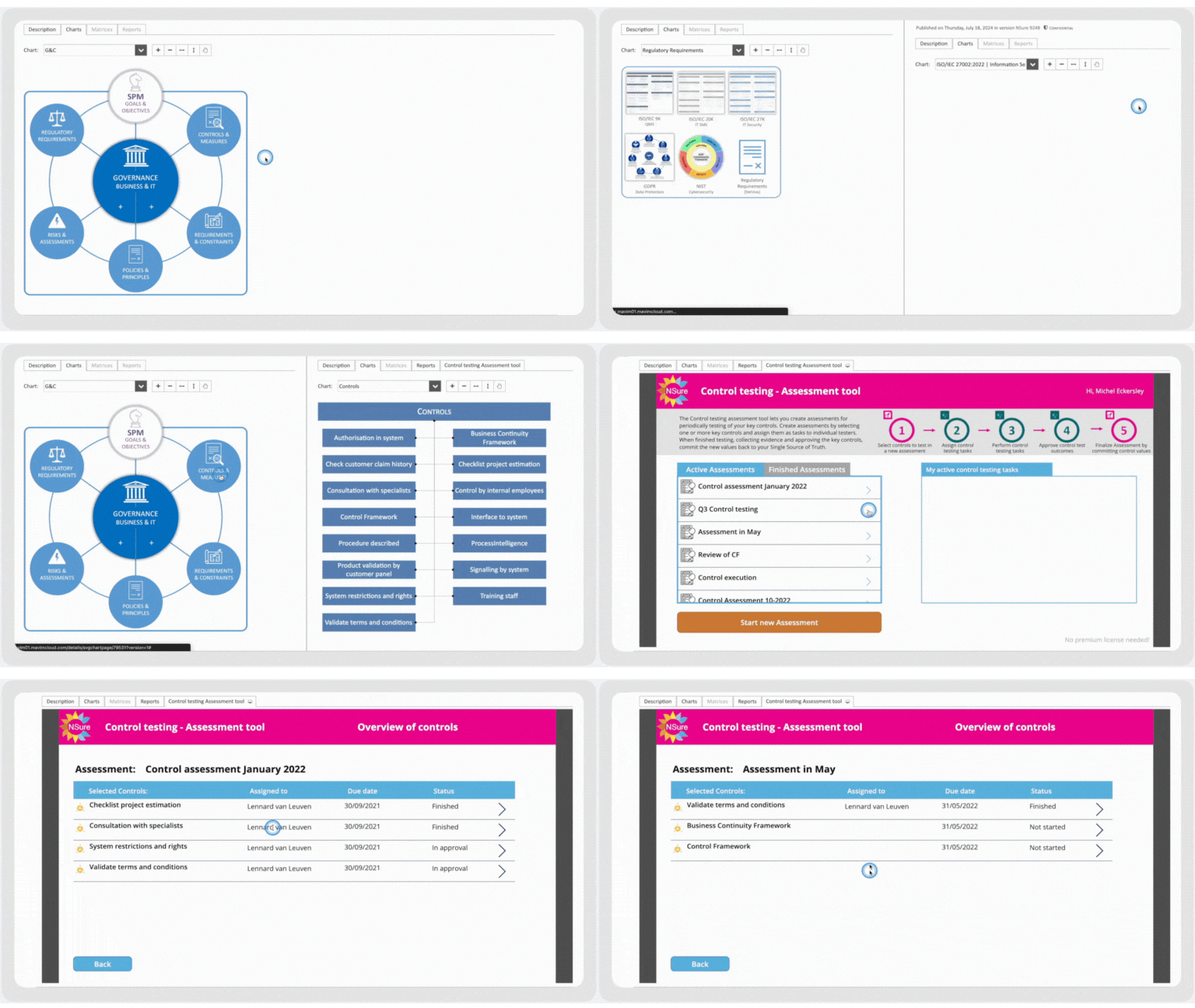
New regulations, policies, and audit findings can affect more than individual controls. They can trigger changes across processes, systems, responsibilities, and documentation. Mavim makes these relationships visible, helping teams understand the impact and respond with control.
Understand the
Impact
See which risks, controls, processes, systems, and owners are affected when requirements change.
Translate Requirements Into Action
Turn new or updated requirements into concrete changes to controls and the operational processes they govern.
Coordinate
Remediation
Make required actions, responsibilities, and dependencies visible so teams can address gaps in a structured way.
Maintain
Traceability
requirements connected to the controls and processes that address them, creating a transparent record as governance evolves.
Understand what a change affects before acting on it, and maintain control as requirements continue to evolve.

Move From Periodic Compliance to Continuous Control
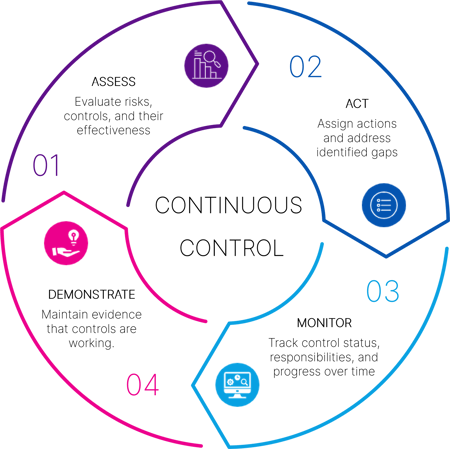
Compliance should not start when an audit approaches. Connect assessments, actions, monitoring, and evidence in an ongoing cycle that helps your organization stay in control.
Keep governance active between assessments, so compliance becomes an ongoing management discipline rather than a periodic exercise.
Apply Connected Governance Where It Matters
Different requirements create different compliance challenges, but the need for business context remains the same. Connect requirements to the risks, controls, processes, responsibilities, and evidence needed to put governance into practice.
Information Security
& Resilience
Bring information security requirements into your operational context. Connect frameworks such as ISO 27001, BIO, and DORA to risks, controls, processes, owners, and evidence to support ongoing security governance and operational resilience.
Connect security requirements to operational control
Privacy & Regulatory Compliance
Translate regulations such as GDPR into actionable governance. See which processes, systems, responsibilities, risks, and controls are affected and maintain the traceability needed to demonstrate compliance.
Turn regulatory requirements into accountable action
ESG & Corporate Governance
Connect governance requirements and ESG commitments to the processes, controls, responsibilities, and evidence needed to put them into practice and maintain accountability.
Bring governance commitments into business context

Bring Governance Into
Your Microsoft Ecosystem
Extend connected governance into the Microsoft technologies your organization already uses. Mavim brings structured business context together with Microsoft tools for collaboration, workflow, reporting, and transformation.
Microsoft 365
Make governed process information, responsibilities, policies, and supporting documentation accessible across the organization.
Power BI
Turn GRC data into clear dashboards for monitoring risks, controls, compliance status, and progress over time.
Power Platform
Support assessments, approvals, evidence collection, and follow-up actions with automated workflows and business applications.
Connect GRC with your broader Microsoft environment, helping governance become part of everyday operations rather than a separate layer.
From Managing Risk to Being Demonstrably in Control
Unigarant uses Mavim to bring processes, risks, and controls together in one connected environment. By making these relationships visible, the organization creates greater transparency around how risks are managed and how controls support day-to-day operations.
Make Governance Part of Every Change
Transformation changes processes, systems, responsibilities, and ways of working. When governance shares the same business context, teams can understand the risks and controls affected before change is implemented.
Change with context
See how transformation initiatives affect processes, systems, risks, controls, and responsibilities.
Build governance into change
Address compliance and control requirements as part of transformation, rather than adding them afterwards.
Stay in control as you transform
Maintain traceability and accountability as your organization continues to evolve.
Frequently Asked Questions About GRC
Learn how connected governance brings risks, controls, compliance requirements, and business processes together, and how Mavim helps organizations stay in control as requirements and operations change.
What is Governance, Risk & Compliance (GRC)?
Governance, Risk & Compliance (GRC) is an integrated approach to managing organizational governance, risks, and regulatory obligations. It helps organizations define responsibilities, manage risks, implement controls, and demonstrate compliance while ensuring these activities support how the business operates.
What is integrated GRC?
Integrated GRC connects governance, risk management, and compliance instead of managing them in separate systems or processes. By linking requirements, risks, controls, processes, systems, and responsibilities, organizations gain a clearer view of how governance requirements affect day-to-day operations.
How does Mavim support Governance, Risk & Compliance?
Mavim connects regulations, policies, risks, controls, processes, systems, and responsibilities within a shared business context. This helps organizations understand where requirements apply, establish accountability, monitor controls, and maintain traceability between compliance obligations and operational execution.
How does GRC relate to business process management?
Business process management defines and improves how work gets done, while GRC helps ensure that work is governed and controlled. Connecting the two allows organizations to associate risks, controls, policies, and regulatory requirements directly with the processes and activities they affect.
Can Mavim support multiple compliance frameworks?
Yes. Mavim provides the structured business context for connecting requirements from multiple standards and frameworks to processes, risks, controls, and responsibilities. Specialized Mavim partners can extend this with predefined content and mappings for specific regulatory and compliance frameworks.
How does Mavim support information security governance?
Mavim helps organizations connect information security requirements to risks, controls, processes, systems, responsibilities, and evidence. This provides the governance context needed to manage security requirements and demonstrate how information security controls are embedded across the organization.
How does Mavim improve audit readiness?
Mavim maintains relationships between requirements, risks, controls, processes, owners, and supporting evidence. This traceability helps organizations understand control status, identify gaps, and provide auditors with a clearer view of how compliance requirements are addressed.
How does Mavim help organizations respond to regulatory change?
Mavim makes dependencies between requirements, controls, processes, systems, and responsibilities visible. When regulations or policies change, teams can identify what is affected, determine required actions, assign ownership, and maintain traceability as changes are implemented.
How can Mavim support ESG governance?
Mavim can connect ESG requirements and commitments to relevant processes, risks, controls, responsibilities, and supporting evidence. This helps organizations embed ESG governance into their operating model and establish accountability for how commitments are put into practice.
How is Mavim different from traditional GRC software?
Traditional GRC platforms often focus primarily on managing risks, controls, compliance activities, and reporting. Mavim approaches GRC through connected business context, linking governance directly to processes, systems, roles, and organizational change. It can also be extended with specialized GRC frameworks and expertise from Mavim partners.

Make Governance Part of How Your Business Operates
Connect requirements, risks, controls, processes, and responsibilities in one shared business context. See how Mavim can help your organization stay in control as regulations, risks, and operations evolve.