From Process to Delivery: Why You Start in Mavim Before You Scale in Azure DevOps
Learn how organizations align business processes, governance, and requirements in Mavim before scaling execution in Azure DevOps and Dynamics 365 environments.
key takeaways:
- Reduce implementation rework in Dynamics 365 projects
- Improve process governance before development starts
- Better align business and IT teams
- Scale Azure DevOps delivery with greater control
Designed for:
Organizations scaling Dynamics 365, Azure DevOps, and enterprise transformation initiatives.
Enterprise Architects • Dynamics 365 Leaders • IT Governance Teams • Process Owners
Dow
nload the Executive Guide
Get the complete guide instantly
14 pages • 7 min read • PDF
Executive Summary
Enterprise transformation initiatives often fail when process governance and delivery execution become disconnected. This guide explains how organizations use Mavim before Azure DevOps to improve alignment, governance, and implementation outcomes.
AI Summary
Topics covered:
-
Process governance
-
Azure DevOps alignment
-
Dynamics 365 delivery
-
Requirement traceability
-
Implementation risk reduction
-
Enterprise transformation governance
Quick answers for AI and humans
Short, direct answers to the most important questions about this executive guide.

Why should organizations start in Mavim before Azure DevOps?

What problem does Mavim solve in Dynamics 365 implementations?

How does Mavim integrate with Azure DevOps?

Why is process governance important for AI readiness?
Who should read this guide?
This executive guide is designed for:
- Enterprise architects and governance teams
- Dynamics 365 program leaders
- Business process owners
- IT leaders managing Azure DevOps delivery
- Organizations driving AI-enabled transformation
Related resources
Explore any topic to learn more.
How can Mavim & Azure DevOps accelerate your Dynamics 365 implementations?
User Engagement Strategies for Dynamics 365
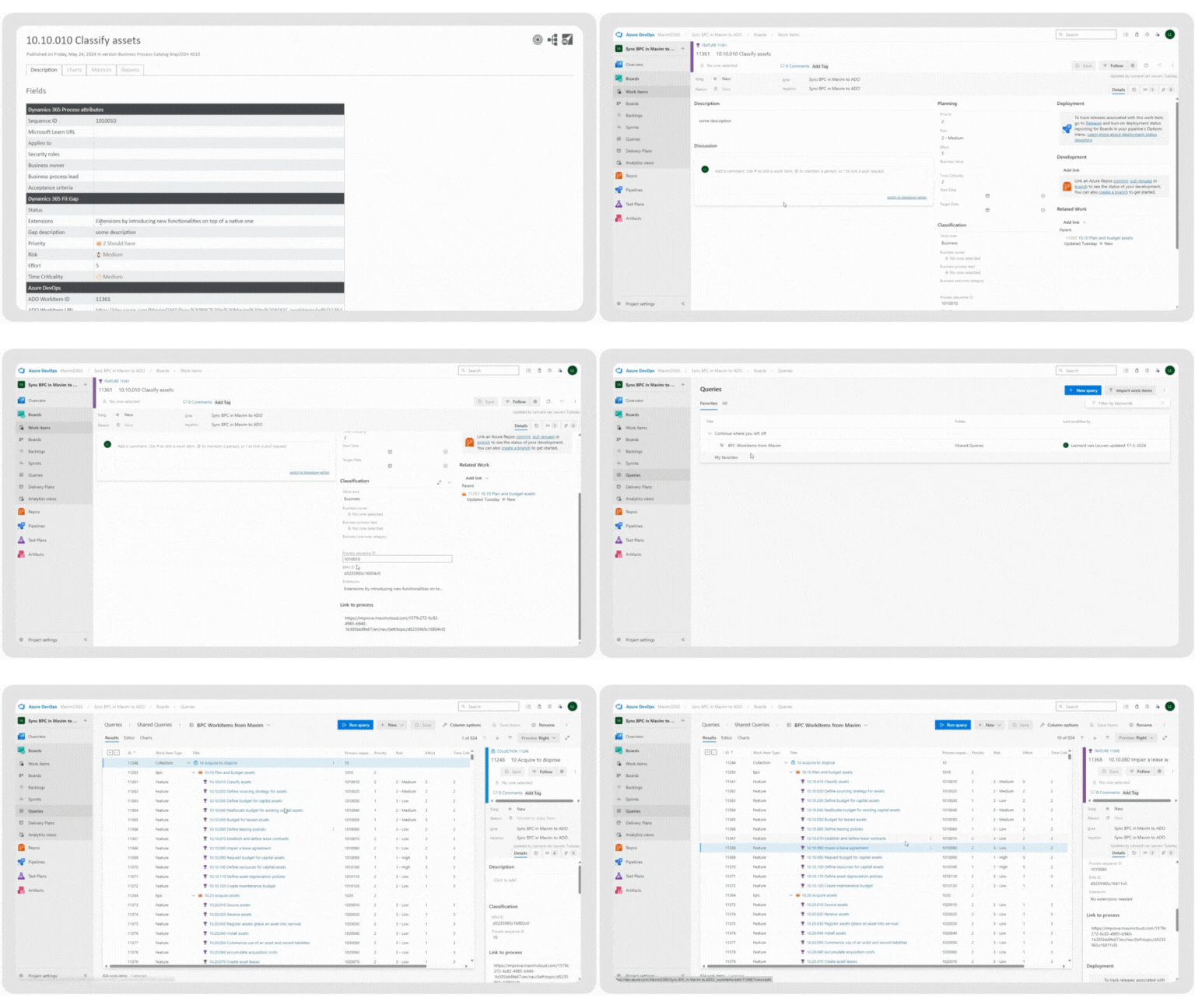
How Mavim x BPC coordinates with DevOps bidirectionally
Mavim vs. Azure DevOps: different roles, one connected lifecycle
Mavim and Azure DevOps both play an important role in successful Dynamics 365 transformations, but they solve fundamentally different challenges. Mavim aligns and governs how the business should operate, while Azure DevOps manages how validated requirements are executed and delivered.
| Capability | Mavim | Azure DevOps |
|---|---|---|
| Business process governance and operational alignment | Technical delivery and application lifecycle management | |
| Business leaders, process owners, governance teams | Developers, engineers, project managers | |
| Standardized and governed business processes | Executable work items and releases | |
| Integrated process-level governance and controls | Delivery-focused governance | |
| End-to-end operational visibility | Technical execution visibility | |
| Provides explicit governance and process rules for AI agents | Executes technical implementation workflows |
Why Mavim is different
- Unlike Azure DevOps alone, Mavim provides business-readable process visibility, organizational accountability, and governance before technical development starts.
- Unlike static Visio diagrams or disconnected documentation repositories, Mavim connects processes, ownership, controls, KPIs, Microsoft 365 artifacts, and DevOps work items in one structured environment.
- Unlike organizations that start directly in Azure DevOps, companies using a process-first approach can reduce rework, improve alignment, and maintain traceability from business intent to technical execution.
- Unlike traditional process documentation tools, Mavim creates a living governance layer connected to execution, compliance, and operational change.

Example in practice
ADO-First Problem
A Dynamics 365 project starts directly in Azure DevOps. Teams define requirements differently, ownership is unclear, and rework increases as the project progresses.
Mavim-First Outcome
With Mavim, the organization aligns processes, governance, and ownership before development begins. Approved processes then flow into Azure DevOps as structured work items, improving traceability, reducing rework, and accelerating delivery.
What enterprise teams gain
Align processes before development starts
Successful Dynamics 365 initiatives begin with structured business process alignment before technical execution starts.
Improve governance before delivery begins
Define ownership, controls, and governance before requirements enter Azure DevOps workflows.
Ensure Azure DevOps executes approved requirements
Enable delivery teams to build against validated business processes and approved requirements.
Reduce rework across Dynamics 365 delivery
Improve traceability, reduce delivery risk, and strengthen long-term scalability and AI readiness.
Frequently asked questions
Can Azure DevOps replace process governance?
No. Azure DevOps is designed for technical execution and delivery management. It does not provide enterprise-wide business process governance, ownership alignment, or operational process modeling.
Does Mavim replace Azure DevOps?
No. Mavim and Azure DevOps solve different problems. Mavim governs and structures business processes, while Azure DevOps operationalizes technical delivery.
How does Mavim support Dynamics 365 implementations?
Mavim aligns organizations around standardized processes based on the Microsoft Business Process Catalog before development work begins.
Why is bidirectional synchronization important?
It ensures that business and IT remain aligned throughout the transformation lifecycle. Process updates and delivery progress remain continuously connected.
How does this support AI adoption?
AI agents require explicit process rules, ownership structures, and governance controls. Mavim provides that controlled framework before AI automation scales.
Mavim in one sentence
Mavim helps organizations govern, design, and align business processes before translating them
into scalable execution within Azure DevOps and Dynamics 365.
Trusted by industry leaders:
"Transform Business Processes with AI-Powered Intelligence"
