











Turn Strategy Into Coordinated Execution
Bridge the gap between strategic ambition and operational reality. Mavim connects your objectives and transformation initiatives with the processes, capabilities, people, and systems required to deliver them, giving teams the business context to understand impact, coordinate change, and keep execution aligned with intended outcomes.
TRUSTED BY ORGANIZATIONS TURNING STRATEGY
INTO COORDINATED CHANGE
The Strategy-to-Execution Gap
Most organizations know where they want to go. The challenge is translating strategic priorities into coordinated change across the business.
As strategy moves into execution, the connection between objectives, initiatives, processes, people, and systems often becomes fragmented. Teams may be delivering projects and tracking progress without a shared view of how those efforts contribute to strategic outcomes.
Objectives Without Operational Context
Strategic goals define what the organization wants to achieve, but often lack a clear connection to the processes, capabilities, people, and systems required to deliver them.
Initiatives Competing for Attention
Transformation initiatives compete for investment and attention without enough visibility into their contribution to strategic priorities or their dependencies on other changes.
Change Without Connected Impact
Strategic decisions can affect multiple parts of the organization. Without connected business context, it is difficult to understand the full impact before change begins.
Progress Without Outcomes
Projects can be delivered on time while strategic objectives remain unmet. Tracking activity and milestones alone does not show whether change is delivering the intended business outcomes.
Connect Strategy With How the Organization Actually Works
Strategy only creates value when it translates into action across the organization. But strategic objectives, transformation initiatives, and operational execution are often managed in separate worlds.
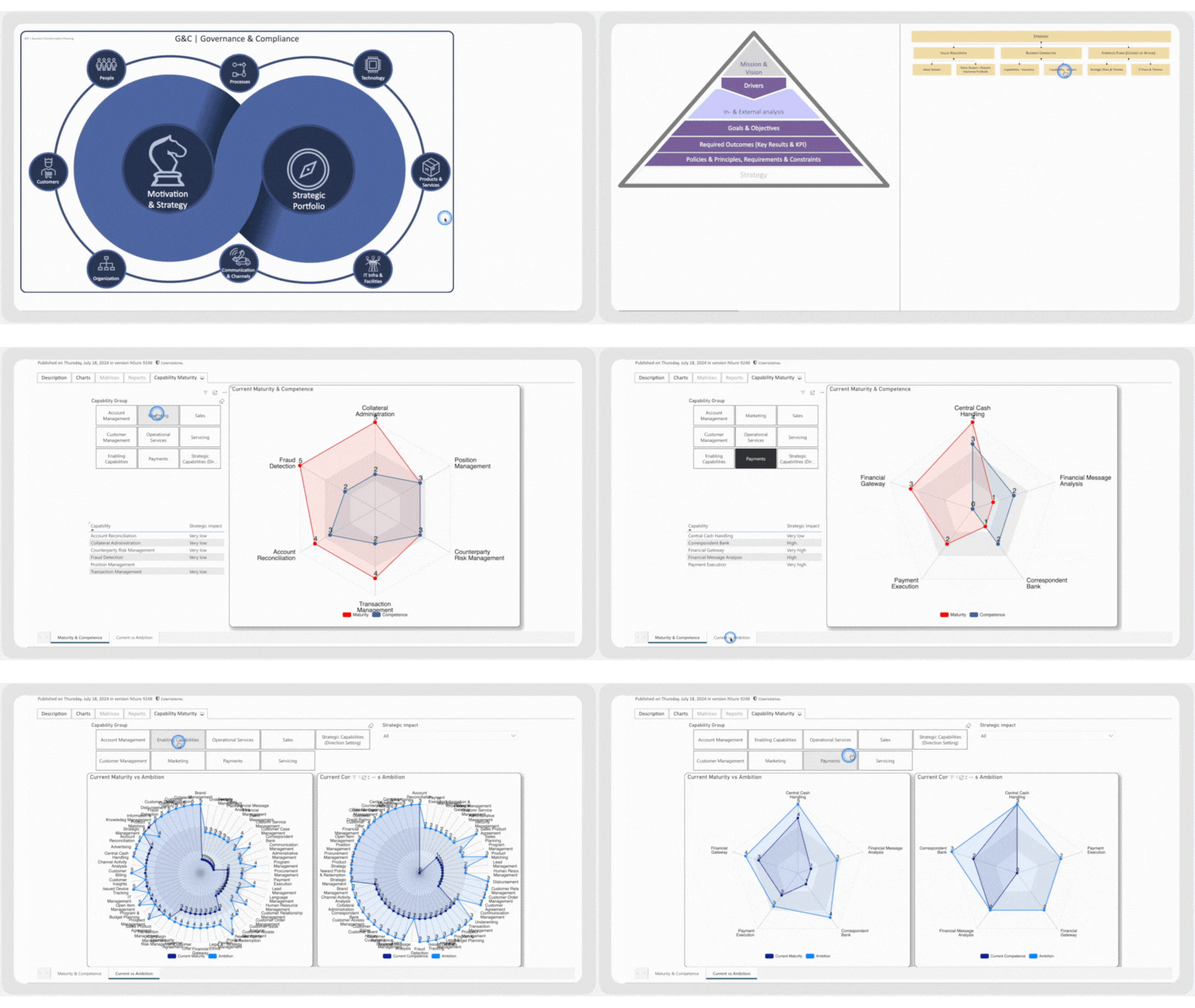
Mavim connects what your organization wants to achieve with the business context required to make it happen. By linking strategic objectives and outcomes to initiatives, capabilities, processes, people, and systems, you can see how strategy translates into change and how that change contributes to the intended results.
actually operates and changes.
Strategy
Define where the organization wants to go and what matters most.
![]()
Objectives & Outcomes
Translate strategic priorities into measurable goals and intended business outcomes.
![]()
Transformation Initiatives
Connect the programs and initiatives designed to deliver those outcomes.
![]()
Business Context
Understand the capabilities, processes, people, and systems that need to support or change.
![]()
Execution
Turn strategic intent into coordinated action across the organization.
![]()
Performance & Outcomes
See whether execution is contributing to the results the strategy was designed to achieve.
Build the Business Context for Strategy Execution
Strategic change rarely affects just one part of the organization. A new objective can require different capabilities, redesigned processes, new responsibilities, technology changes, and new governance.
Mavim brings these relationships together in a connected business context, helping leaders and transformation teams understand what needs to change, where dependencies exist, and who or what will be affected.
Processes
See which ways of working support strategic objectives and where processes need to change.
Capabilities
Understand which business capabilities are required to deliver strategic priorities and where gaps may exist.
People & Organization
Connect change to the teams, roles, responsibilities, and organizational structures involved in execution.
Applications & Technology
See which applications and systems enable strategic change and where technology dependencies need to be considered.
Governance
Make ownership, responsibilities, and decision-making clear as strategy moves into execution.

Together, these connected perspectives provide the organizational context needed to turn strategic intent into coordinated change.
From Strategic Priorities to Coordinated Change
Strategy execution is not a single handoff from planning to delivery. It is a continuous process of translating priorities into change, coordinating execution, and evaluating whether that change is delivering the intended outcomes.
Mavim creates a connected line of sight throughout that journey.
See the Impact Before You Make the Change
Strategic decisions rarely have isolated consequences. A new objective, transformation initiative, or operating model can affect capabilities, processes, teams, applications, and other changes already underway.
Mavim makes these relationships visible, helping you understand the potential impact and dependencies before decisions move into execution.
Trace Change Across the Organization
See how strategic objectives connect to the capabilities, processes, organization, applications, and initiatives they depend on.
Trace Change Across the Organization
See how strategic objectives connect to the capabilities, processes, organization, applications, and initiatives they depend on.
Identify Dependencies Early
Understand where initiatives overlap, where one change depends on another, and where competing priorities could create conflicts.
Understand Who and What Is Affected
Identify the teams, roles, processes, and systems impacted by a proposed change so the right stakeholders can be involved early.
Make Better-Informed Decisions
Evaluate change in its broader organizational context rather than looking at initiatives in isolation.
Strategy → Capabilities → Processes → Organization → Applications → Initiatives
Understand the architecture behind the change.
Keep Strategy and Execution Connected
Strategy execution does not end when initiatives move into delivery. Priorities shift, performance changes, and new insights emerge. Organizations need a continuous view of whether execution remains aligned with strategic intent.
Mavim connects strategy, change, and operational performance, helping teams evaluate progress in context and adjust when reality no longer matches the plan.
Monitor What Matters
Connect strategic objectives and intended outcomes to the initiatives and operational areas responsible for delivering them.
Understand Performance in Context
Look beyond project milestones to understand how processes and operations are performing and whether change is producing the expected results.
Identify Where Alignment Is Drifting
Spot gaps between strategic intent, transformation activity, and operational reality before they become larger execution problems.
Adapt as Conditions Change
Use performance insights and connected business context to reassess priorities, refine initiatives, and continuously steer execution toward the intended outcomes.
Connect Strategy With the Systems Where Execution Happens
Bring business context together with the Microsoft tools your teams use to manage change, analyze performance, and run the business. Connect Mavim with Microsoft Power BI, Power Platform, Dynamics 365, and Azure DevOps to create greater visibility from strategic intent to operational execution and outcomes.
Strategy Execution in Action
Organizations use Mavim when strategic change needs to move beyond plans and presentations and become coordinated action across the business.
Deliver a New Strategic Priority
A new growth strategy, customer proposition, sustainability objective, or operating model can affect multiple parts of the organization. Connect the strategic priority to the business areas that need to change and create shared context for execution.
Coordinate Enterprise Transformation
Large transformation programs often involve multiple initiatives, teams, processes, and technologies at the same time. Understand how those changes relate, where dependencies exist, and how they collectively support strategic objectives.
Navigate Organizational Change
Restructuring, mergers, new operating models, and shifts in responsibilities can have consequences across processes, roles, capabilities, and systems. Use connected business context to understand those consequences and coordinate change across organizational boundaries.
Turn Strategic Reviews Into Action
When priorities or performance change, quickly understand what that means for initiatives and operations. Use the relationships between strategy and the organization to determine where plans, processes, or transformation efforts need to be adjusted.
Strategy Execution on the Mavim Platform
Strategy execution does not happen in isolation. It depends on how processes operate, which capabilities enable change, how technology supports the business, and what performance data reveals about execution.
Mavim brings these perspectives together on one connected platform and connects that business context with the Microsoft ecosystem where transformation, analysis, and operational execution happen.
Connect Strategy to How Work Gets Done
Understand which processes support strategic objectives, how work needs to change, and where ownership and governance are required to turn priorities into operational execution.
Understand What Enables Change
Connect strategic priorities to the business capabilities, applications, and technology that enable them. See dependencies and understand how architecture supports or constrains transformation.
Connect Strategy to Operational Reality
Use process data and performance insights to understand how work actually happens and where operational reality may be helping or hindering strategic outcomes.
See the Organization as a Connected System
Bring strategy, processes, people, capabilities, systems, and governance together in a living organizational model. Understand relationships and dependencies across the business as strategy moves into execution.
Connect Business Context With the Microsoft Tools Where Work Happens
Extend connected business context into the Microsoft ecosystem with purpose-built Mavim connectors. Bring process and transformation context closer to the tools teams use to manage change, make decisions, and execute work across the organization.
Connecting Strategic Change Across the Organization
Strategic change at DELA can affect many parts of the organization at once, from customer services and processes to organizational structures and supporting systems. Understanding those relationships is essential to turning strategic decisions into coordinated change.
With Mavim, DELA creates a connected view of how the organization works and how different elements relate. This helps teams understand the broader impact of change, align stakeholders around a shared view of the organization, and translate strategic direction into changes across the business.
From Strategy to Organizational Impact
Instead of looking at processes, organization, and systems in isolation, DELA can understand how they connect and where strategic change has consequences across the organization.
This connected business context gives DELA a stronger foundation for navigating change with greater visibility and alignment.
Why Mavim for Strategy Execution
Strategy execution requires more than tracking objectives and initiatives. Mavim provides the connected business context needed to understand what strategic change means for the organization and keep strategy, transformation, and execution aligned.
-
Connect Strategy to Business Context
-
Understand Transformation Impact
-
Align Teams Around a Shared View
-
Connect Execution With Outcomes
-
Build Strategy Execution on Connected Transformation
Connect Strategy to Business Context
Go beyond objectives and initiatives by connecting strategic priorities to the processes, capabilities, people, systems, and organizational structures required to deliver them.
Understand Transformation Impact
See how strategic decisions and transformation initiatives affect the organization before change begins. Identify dependencies, overlaps, and impacted stakeholders in context.
Align Teams Around a Shared View
Give strategy, transformation, architecture, process, and business teams a common understanding of what needs to change, why it matters, and how their work contributes to strategic priorities.
Connect Execution With Outcomes
Maintain a line of sight from strategic intent to organizational change and operational performance, helping teams understand whether execution continues to support the intended outcomes.
Build Strategy Execution on Connected Transformation
Bring strategy execution together with Business Process Management, Enterprise Architecture, Process Intelligence, and a Digital Twin of the Organization on one connected platform.
Explore Strategy Execution
Go deeper into the principles behind effective strategy execution, from closing the gap between strategic intent and operational reality to building the connected business context needed to navigate change.
Bridging the Gap: Strategies for Successful Strategy Execution
Why do well-defined strategies still fail in execution? Explore the common causes of the strategy-execution gap and practical ways to improve alignment, decision-making, and the translation of strategic goals into action.
Intelligent Operations: Bridging Strategy and Execution
Explore how intelligent operations can help organizations create greater transparency, translate strategic direction into actionable plans, and keep teams aligned as strategy moves into execution.
From Strategy Execution Management to a Digital Twin of Your Organization
Discover how strategy execution can evolve from managing goals and initiatives toward a connected view of the organization. See how strategy, processes, capabilities, technology, and performance can come together to support better-informed transformation decisions.
Strategy Execution Questions, Answered
Get clear answers to common questions about strategy execution, from translating strategic objectives into coordinated change to connecting strategy with business processes, enterprise architecture, and a Digital Twin of the Organization.
What is strategy execution?
Strategy execution is the process of translating strategic objectives into coordinated action across the organization. It connects what an organization wants to achieve with the initiatives, capabilities, processes, people, systems, and decisions required to deliver those objectives and achieve the intended business outcomes.
What is the difference between strategy and strategy execution?
Strategy defines where an organization wants to go and what it wants to achieve. Strategy execution turns that direction into action by translating objectives into outcomes, initiatives, and organizational change. Effective execution also creates feedback between operational performance and strategic priorities so organizations can adjust when conditions change.
Why do organizations struggle with strategy execution?
Strategy execution becomes difficult when strategic objectives, transformation initiatives, and operational reality are disconnected. Teams may understand the strategy without knowing what it means for their processes, capabilities, systems, or responsibilities. This makes it harder to coordinate change, understand dependencies, measure outcomes, and maintain alignment as priorities evolve.
How do you connect strategy to business processes?
Connecting strategy to business processes creates a direct relationship between strategic objectives and the work required to achieve them. Organizations can identify which processes support specific objectives, understand where processes need to change, assign ownership, and use operational performance to determine whether execution continues to support strategic intent.
What is the difference between strategy execution and strategic portfolio management?
Strategy execution focuses on translating strategic objectives into coordinated organizational action and achieving intended outcomes. Strategic portfolio management typically focuses more specifically on selecting, prioritizing, funding, and managing portfolios of investments and initiatives. The disciplines overlap, but strategy execution extends beyond the portfolio into how change affects and is executed across the organization.
How does enterprise architecture support strategy execution?
Enterprise architecture helps organizations understand which business capabilities, applications, technologies, and dependencies enable strategic change. Connecting this architecture to strategic objectives provides greater visibility into what a transformation requires, where constraints or dependencies exist, and how technology decisions support broader business priorities.
How does a Digital Twin of the Organization support strategy execution?
A Digital Twin of the Organization creates a connected representation of how an organization operates by bringing together elements such as strategy, processes, capabilities, people, systems, and governance. This business context helps leaders assess the impact of strategic decisions, understand dependencies, explore change, and connect strategic intent more closely with operational reality.
How does Mavim support strategy execution?
Mavim connects strategic objectives with the business context required to execute them. By linking strategy and transformation initiatives to processes, capabilities, people, systems, governance, and operational insights, Mavim helps organizations understand the impact of change, coordinate execution, and maintain a line of sight between strategic intent and business outcomes.

Connect Strategic Ambition With Execution
See how Mavim connects strategic objectives with the processes, capabilities, people, systems, and transformation initiatives required to deliver them. Create the business context your teams need to understand change, coordinate execution, and keep strategic intent connected to outcomes.