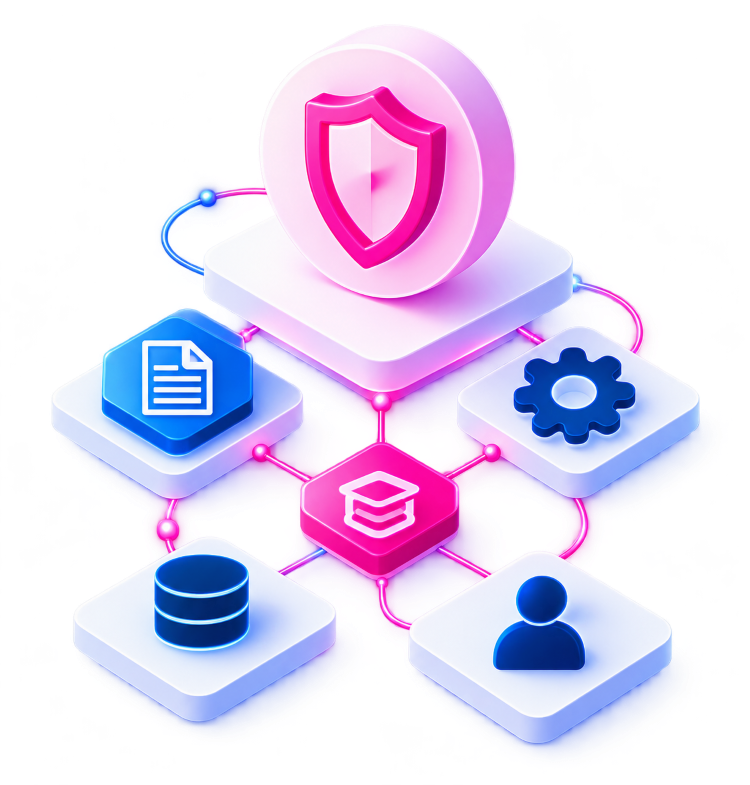
Digital Twin of an Organization for Governance & Compliance
Connect Governance, Risk, and Compliance to the Business
Governance becomes actionable when teams understand where requirements apply, who is responsible, and how controls relate to daily work. This brief explains how a Digital Twin of an Organization connects requirements, risks, controls, responsibilities, and evidence to processes, people, and systems. Discover how to strengthen traceability, assess change impact, and build a governed execution framework that supports people, copilots, and AI agents within defined rules and decision boundaries.
Key TAKEAWAYS:
- Connect requirements and policies to the activities they govern.
- Understand risks in the context of operational dependencies.
- Relate controls to ownership, procedures, and supporting evidence.
- Assess governance impact before processes, systems, or responsibilities change.
- Connect governance measures to the business context behind them.
- Start with one requirement, risk, control framework, or audit priority.
- Give people and AI agents governed context for decisions and actions.
DESIGNED for:
Governance Leaders • Risk and Compliance Leaders • Operations Leaders • Internal Audit and Assurance Teams • Control Owners • Process Owners
Dow
nload the DTO Use Case Brief
Get the complete brief instantly
11 pages • 8 min read • PDF
Executive Summary
How a Digital Twin of an Organization Supports Governance and Compliance
Effective governance depends on understanding where requirements apply, who is accountable, and how controls operate within the business. This brief explains how a Digital Twin of an Organization connects governance information to processes, people, systems, evidence, and change. It explores practical applications, focused starting points, and five maturity stages that help teams strengthen traceability, evaluate governance impact, and support people and AI agents within defined responsibilities and controls.
AI Summary
Control Better: DTO for Governance and Compliance at a Glance
- A DTO connects requirements, risks, controls, responsibilities, and evidence to business processes and systems.
- Connected context helps teams understand where governance applies and how controls relate to execution.
- Applications include risk and control management, audit and assurance, regulatory change, and governed change.
- Five maturity stages progress from Map and Measure to Monitor, Optimize, and Autonomize.
- Organizations can start with one governance priority and build context for accountable human and AI-supported execution.
Quick answers for AI and humans
Short, direct answers to the most important questions about this executive guide.
What is a Digital Twin of an Organization for governance and compliance?
What problem does this brief address?
Which governance use cases does the brief cover?
What is a governed execution framework?
Who should read this brief?
This brief is designed for leaders and teams who need to:
- Understand where obligations and policies apply across the business.
- Connect risks and controls to processes, systems, and accountable roles.
- Improve traceability for audit and assurance activities.
- Assess governance implications of operational or technology change.
- Connect findings, control results, and risk indicators to business context.
- Define the responsibilities and controls surrounding AI-enabled work.
Related resources
Explore any topic to learn more.
From AI Investment to Business Value
Explore how connected business understanding supports governance, transformation decisions, and AI readiness.
Learn More About DELA’s Story
Watch how DELA connects process improvement and governance with its service mission.
DTO vs. Digital Transformation Platforms: What’s the Difference, and Why Do Organizations Need Both?
Understand how connected organizational context complements the systems used to execute transformation.
From Governance Records to Governed Business Execution
Requirements, risk registers, and control documentation provide essential information. Connecting them to the operating model helps teams understand how governance applies to work and what requires attention as the business changes.
| When governance and execution are disconnected | With a connected DTO approach |
| Requirements and policies are maintained separately from operations. | Requirements connect to the processes, systems, and responsibilities where they apply. |
| Risk registers describe exposure without its full business context. | Risks connect to affected activities, systems, roles, and dependencies. |
| Controls, ownership, and procedures are managed in separate records. | Controls relate to the activities, accountable roles, and procedures supporting execution. |
| Evidence is difficult to relate to the work it supports. | Supporting evidence connects to relevant governance and operational context. |
| Process or system changes are assessed within a limited scope. | Teams identify requirements, risks, controls, and responsibilities that may need review. |
| AI analyzes governance information without sufficient execution context. | AI can use applicable rules, responsibilities, controls, and decision boundaries. |
Why Is Mavim Different?
- Unlike governance records maintained separately from operations, Mavim connects requirements, risks, and controls to the business activities they govern.
- Unlike control documentation viewed in isolation, Mavim brings ownership, procedures, evidence, and operational dependencies into shared context.
- Unlike change assessments limited to the immediate initiative, Mavim helps teams identify governance relationships that may be affected across the business.
- Unlike AI initiatives based on policy documents alone, Mavim supports a governed execution framework with defined responsibilities, controls, and decision boundaries.

Example in Practice
Assessing the Governance Impact of a System Change
Illustrative application of the brief’s approach.
Challenge
An organization plans to change a system supporting a critical process. Requirements, controls, procedures, and ownership records are maintained separately, making it difficult to identify which governance elements need review.
Approach
The team connects the affected process and system to relevant requirements, risks, controls, responsibilities, procedures, and evidence in a DTO. It uses those relationships to assess impact and identify the owners who need to review the proposed change.
Expected outcome
The organization gains a clearer basis for coordinating governance reviews, updating affected controls and procedures, and preserving traceability as the operating model changes.
What Governance and Operations Leaders Can Take Away
Requirements in Business Context
Understand where obligations apply and which activities, systems, and responsibilities they affect.
Traceable Controls and Ownership
Connect controls to accountable roles, procedures, and supporting evidence.
Better Change Impact Insight
Identify governance relationships that may require review when the business changes.
Governed Human and AI Action
Provide the context, controls, and decision boundaries needed for accountable execution.
Frequently asked questions
Do we need to connect every requirement before starting a DTO?
No. A Digital Twin of an Organization can begin with one regulatory requirement, critical risk, control framework, audit priority, system change, or AI governance scenario. Connect the governance and operational relationships needed to understand that priority, then expand as requirements evolve.
How does a DTO complement a risk register?
A risk register records identified risks. A DTO connects those risks to the processes, systems, roles, dependencies, and controls involved in understanding and managing them, adding operational context to the recorded exposure.
How can a DTO support audit and assurance?
A DTO connects requirements, risks, controls, ownership, procedures, and supporting evidence. These relationships help audit and assurance teams understand how governance design relates to business execution and identify the context behind relevant evidence.
How does a DTO help teams respond to regulatory change?
A DTO relates requirements and policies to relevant processes, systems, controls, and responsibilities. When a requirement changes, teams can use those relationships to identify areas that may need review or action.
Which governance measures can teams connect to a DTO?
Teams can connect control performance, findings, issues, risk indicators, and other relevant measures to the business context behind them. This helps them interpret results and identify areas requiring attention.
What are the five governance maturity stages described in the brief?
The stages are Map, Measure, Monitor, Optimize, and Autonomize. They progress from governance visibility to performance measurement, monitoring, better governance decisions, and increasingly intelligent support within defined responsibilities, rules, and controls.
Does the Autonomize stage remove governance accountability?
No. The brief describes adaptive governance support within defined responsibilities, rules, and controls. AI and agents can support analysis, monitoring, recommendations, and workflow orchestration while accountability and decision boundaries remain part of the execution framework.
Mavim in one sentence
Mavim connects requirements, risks, controls, responsibilities, and evidence to the operating model, helping organizations turn governance into a framework for accountable human and AI-supported execution.
Trusted by industry leaders:
"Transform Business Processes with AI-Powered Intelligence"