











```
ENTERPRISE ARCHITECTURE

Connect Business and Technology to Transform With Confidence

Understand how business capabilities, processes, applications, information, and technology fit together. Mavim gives enterprise architects a connected view of the organization to reveal dependencies, assess the impact of change, and guide transformation from current state to target state.

TRUSTED BY ORGANIZATIONS CONNECTING BUSINESS AND TECHNOLOGY TO DRIVE TRANSFORMATION

  • Jabra
  • Salvation Army-1
  • Zeppelin-Cat
  • JM Family
  • Carglass
  • Cargill
  • Cegeka
  • schiphol-logo-grey
  • Dominos
  • Mondelez
  • Accenture
  • Port-of-Rotterdam
THE CHALLENGE

When Business and IT Lose Sight of Each Other

As organizations transform, processes, applications, capabilities, and technology become increasingly interconnected. But the knowledge about those connections is often fragmented across teams and tools.

Without a shared view of the enterprise, dependencies remain hidden, complexity grows, and change becomes harder to navigate.

Transformation decisions are only as good as the context behind them.

THE SOLUTION

Connect Business and IT in One Enterprise View

Mavim connects business capabilities, processes, applications, information, and technology in one shared enterprise model.

By making relationships and dependencies visible, teams can understand how the organization fits together, assess the impact of change, and make better-informed transformation decisions.

See the enterprise as a whole. Change it with confidence.


CONNECT THE ENTERPRISE

See How Business and Technology Fit Together

Enterprise architecture becomes more valuable when business and technology are viewed in context. Mavim connects the key layers of the enterprise, making it easier to understand how strategic change translates into operational and technology impact.

bulb (1)

Business Capabilities

Understand which capabilities support strategic priorities and where change or investment may be required.

link (1)

Processes

Connect capabilities to the processes that turn business objectives into day-to-day operations.

eye (2)

Applications

See which applications support processes and capabilities, and identify dependencies, overlap, and opportunities for rationalization.

info (1)

Information

Understand how information supports the business and where it flows across processes and applications.

cubes

Technology

Connect applications to the underlying technology landscape to understand dependencies and support modernization decisions.
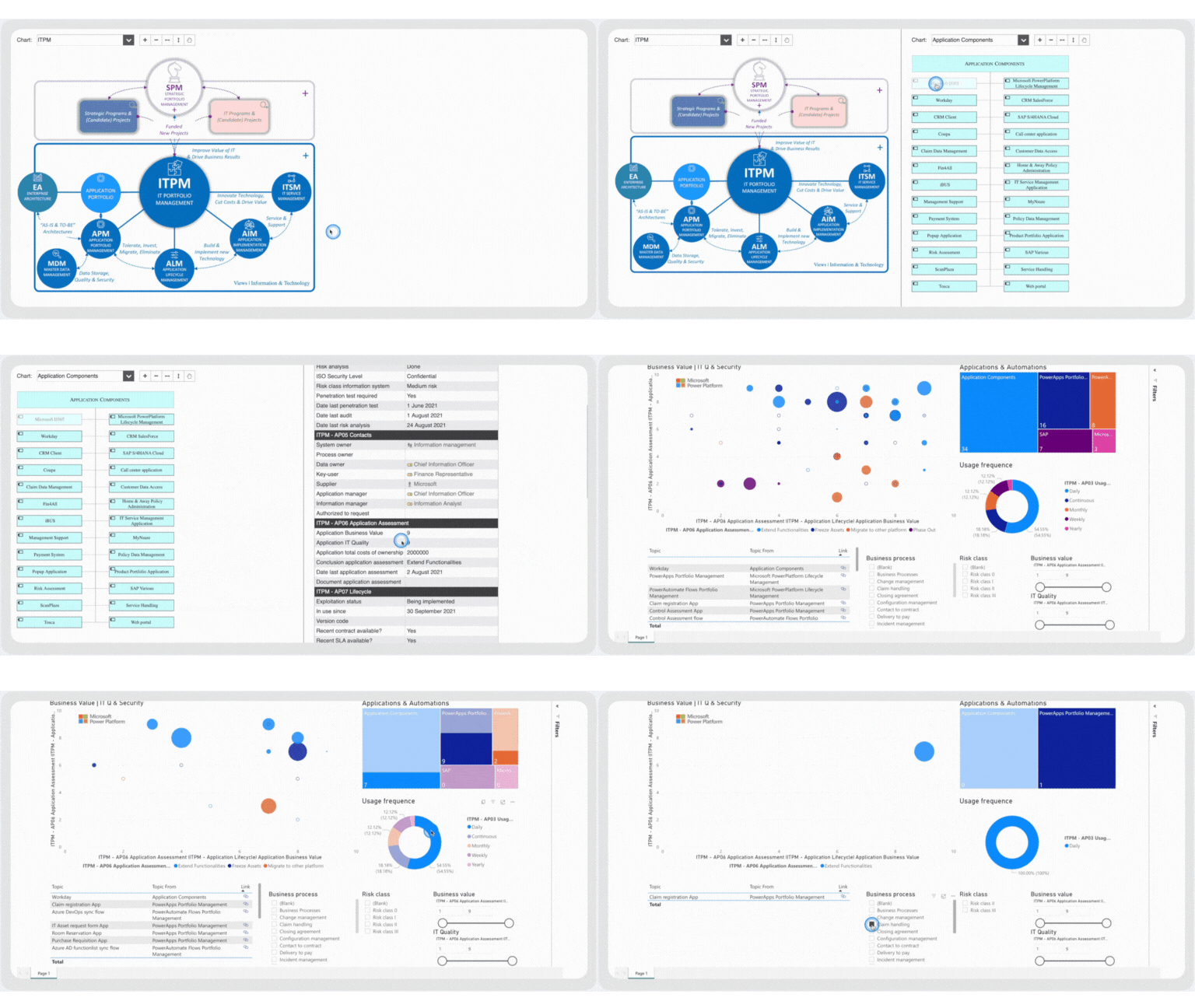
Strategy → Capabilities → Processes → Applications → Technology
IMPACT ANALYSIS

Know What Change Affects Before It Happens

Change rarely affects just one part of the enterprise. Mavim makes relationships and dependencies visible, helping teams understand what will be affected before decisions are made.

  • Change a Business Capability

  • Change a Process

  • Replace an Application

  • Modernize Technology

Change a Business Capability

See which processes, applications, information, and technologies support it and where dependencies exist.

Change a Process

Understand which applications, roles, information flows, and capabilities may be affected.

Replace an Application

Identify the processes and business capabilities that depend on it before consolidating, replacing, or retiring it.

Modernize Technology

See which applications and business operations rely on underlying technology before making changes to the IT landscape.

See the connections. Understand the impact. Make change with confidence.
IT PORTFOLIO MANAGEMENT

Turn Architecture Into Better IT Decisions

Enterprise architecture provides the context to make better decisions about the application landscape. Mavim connects applications to the capabilities and processes they support, helping teams assess where technology creates value and where complexity can be reduced.

Use this insight to prioritize investments, identify redundancy, rationalize applications, and plan modernization with greater confidence.

Make every technology decision with the business context in view.

ITPM GB
ENTERPRISE ARCHITECTURE IN ACTION

See Enterprise Architecture at Work

Turn architecture from a static representation of the enterprise into a practical tool for transformation. See how Mavim brings business and technology context together to help teams explore dependencies, assess change, and make informed architecture decisions.

Application Rationalization
Identify overlap, redundancy, and opportunities to simplify the application landscape.

Business & IT Alignment
Connect applications and technology to the capabilities and processes they support.

Transformation Impact Analysis
Understand dependencies and assess what will be affected before change begins.

Technology Modernization
Use business context to guide consolidation, replacement, and modernization decisions.

FROM ARCHITECTURE TO TRANSFORMATION

Make Enterprise Architecture Part of How Change Happens

Enterprise architecture creates the bridge between strategic ambition and operational change. By connecting what the organization wants to achieve with the capabilities, processes, applications, and technology involved, Mavim helps teams translate transformation goals into coordinated change.

DEFINE THE DIRECTION

Strategy Execution

Connect strategic priorities to the capabilities and changes required to deliver them.

UNDERSTAND THE ENTERPRISE

Enterprise Architecture

See how business and technology fit together and determine where change will have an impact.

DESIGN HOW WORK SHOULD HAPPEN

Business Process Management

Translate change into processes, roles, responsibilities, and governance.

IMPROVE CONTINUOUSLY

Process Intelligence

Compare designed processes with actual execution and identify where further improvement is needed.

BUSINESS + IT

Connect Architecture With How the Business Actually Works

Enterprise architecture shows how the organization is structured. Business process management shows how work flows through it. Mavim brings both perspectives together in one connected model.

See not only which applications and technologies exist, but which processes they support, who depends on them, and how changes to the architecture affect day-to-day operations.

Connect the architecture of the enterprise to the reality of how work gets done.

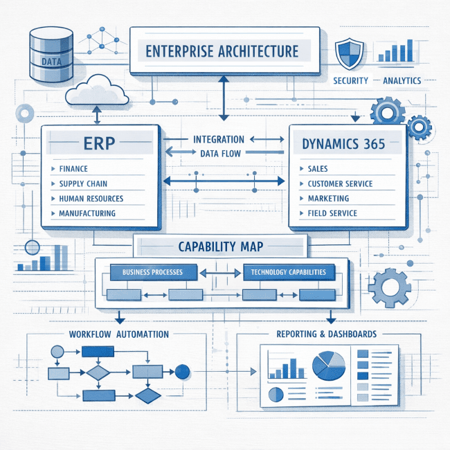
Abstract blueprintstyle illustration of an enterprise architecture diagram seamlessly connected to ERP and Dynamics 365 application blocks with proces
BUILT FOR MICROSOFT TRANSFORMATION

Bring Business Context to Dynamics 365 Transformation

Dynamics 365 transformation changes more than technology. Mavim connects enterprise architecture, business processes, and the Microsoft ecosystem to help teams understand where they are today, design where they need to go, and manage the change between them.

idea

Understand the Current Landscape

Map applications, capabilities, processes, and dependencies to create a shared view of the existing business and technology landscape.

edit (1)

Design the Target Architecture

Connect future business capabilities and processes to the applications and technology required to support the target operating model.

statistics

Manage Transformation Impact

See which processes, systems, roles, and dependencies are affected as the organization moves from current to future state.

windows (2)FROM ARCHITECTURE TO EXECUTION

Connect architecture and business context with Dynamics 365, Power Platform, Azure, and Microsoft 365 to help business and IT teams move transformation forward together.
Explore Dynamics 365 Transformation
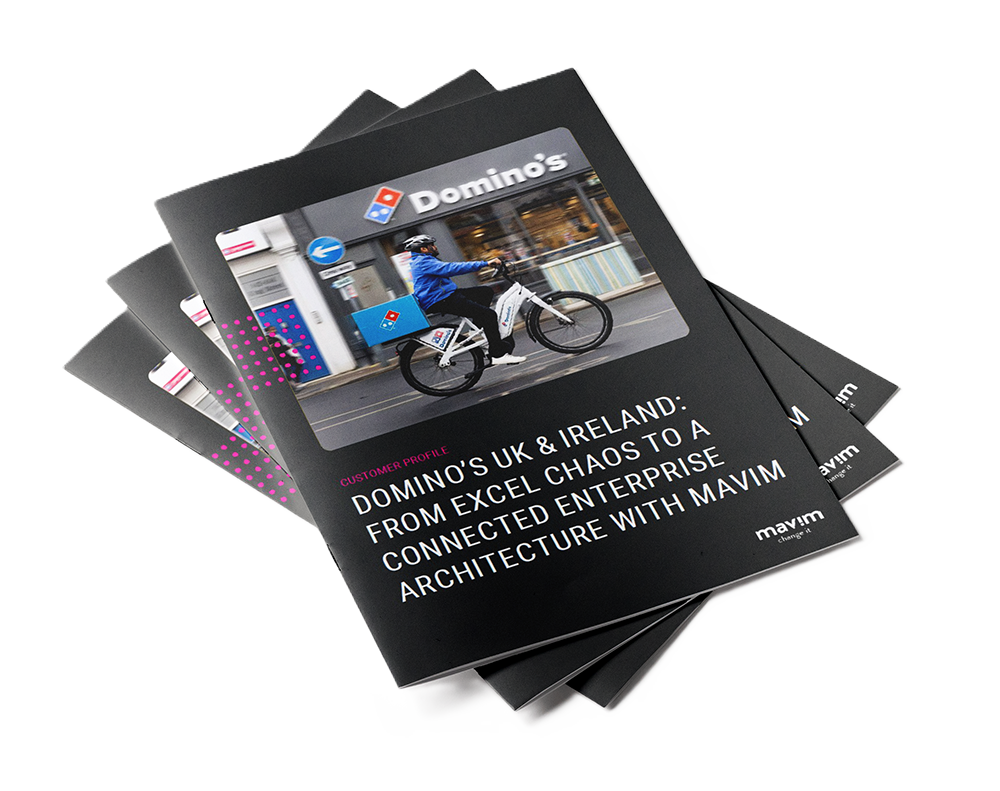
CP - Dominos
CUSTOMER SUCCESS

From Spreadsheet Chaos to a Living Enterprise Architecture

Domino’s UK & Ireland

As Domino’s prepared for its Dynamics 365 Finance & Operations rollout, its spreadsheet-based approach to enterprise architecture and IT portfolio management could no longer provide the visibility and scalability needed for transformation.

With Mavim, Domino’s created a connected, collaborative view of its IT landscape, providing a stronger foundation for portfolio decisions and helping the organization prepare for transformation with greater clarity and confidence.

WHY MAVIM

Enterprise Architecture Built for Transformation

Mavim goes beyond documenting architecture. By connecting business and technology in one shared transformation context, teams can understand the enterprise, assess the impact of change, and turn architecture into action.

uml

Business + IT in One Model

Connect capabilities, processes, applications, information, and technology to understand how the enterprise fits together.

problem-solving (1)

Enterprise Architecture + BPM

Bring architecture and process management into the same platform, connecting how the enterprise is structured with how work actually gets done.

insight

Impact Analysis in Context

Explore relationships and dependencies across the enterprise to understand what change affects before decisions are made.

connection (1)

From Current State to Target State

Use connected business and technology context to understand today’s landscape, design future-state architecture, and guide transformation.

windows (2)

Built for the Microsoft Ecosystem

Connect enterprise architecture and business context with Microsoft technologies to support transformation across Dynamics 365, Power Platform, Azure, and Microsoft 365.
RESOURCES

Explore Enterprise Architecture in Practice

Go deeper into how Mavim connects business and technology to support architecture decisions, transformation, and enterprise-wide change.

ENTERPRISE ARCHITECTURE FAQs

Frequently Asked Questions About Enterprise Architecture

Learn what enterprise architecture is, how it supports business transformation and IT portfolio management, and how Mavim connects business and technology to help organizations make better-informed change decisions.

What is enterprise architecture?

Enterprise architecture (EA) provides a structured view of how an organization's business capabilities, processes, information, applications, and technology fit together. It helps organizations understand their current landscape, design future-state architecture, identify dependencies, and make informed decisions about business and technology change.

What is the role of enterprise architecture in business transformation?

Enterprise architecture connects transformation goals to the business and technology landscape required to deliver them. By showing relationships between capabilities, processes, applications, information, and technology, EA helps organizations understand what needs to change, assess dependencies, and design a coordinated path from the current state to the target state.

What is the difference between enterprise architecture and business process management?

Enterprise architecture focuses on how business capabilities, applications, information, and technology are structured and connected across the enterprise. Business process management focuses on how work is designed, executed, governed, and improved. Connecting EA and BPM provides both the structural and operational context needed to manage transformation.

What is IT portfolio management?

IT portfolio management (ITPM) is the practice of evaluating and managing an organization's applications and technology investments. By connecting applications to the capabilities and processes they support, organizations can assess business value, identify redundancy, prioritize investments, and make better-informed decisions about consolidation, replacement, and modernization.

How does enterprise architecture support application rationalization?

Enterprise architecture makes relationships between applications, business capabilities, processes, and technology visible. This helps organizations identify overlapping or redundant applications while understanding what the business depends on before systems are consolidated, replaced, or retired. Application rationalization can therefore consider business impact alongside cost and technical factors.

How does enterprise architecture support impact analysis?

Enterprise architecture maps relationships and dependencies across the organization. When a capability, process, application, or technology changes, teams can trace those connections to understand what else may be affected. This provides greater visibility into potential downstream impact before transformation decisions are implemented.

How does enterprise architecture support Dynamics 365 transformation?

Enterprise architecture helps organizations understand their current business and application landscape before moving to Dynamics 365 and design the target architecture needed to support future operations. Connecting architecture with processes and dependencies also helps teams assess transformation impact and align business requirements with technology decisions throughout implementation.

How does Mavim support enterprise architecture?

Mavim connects business capabilities, processes, applications, information, technology, roles, and governance in a shared enterprise model. Enterprise architects can visualize relationships, analyze dependencies, assess change impact, and connect current- and future-state architecture with broader transformation initiatives, business process management, and the Microsoft ecosystem.

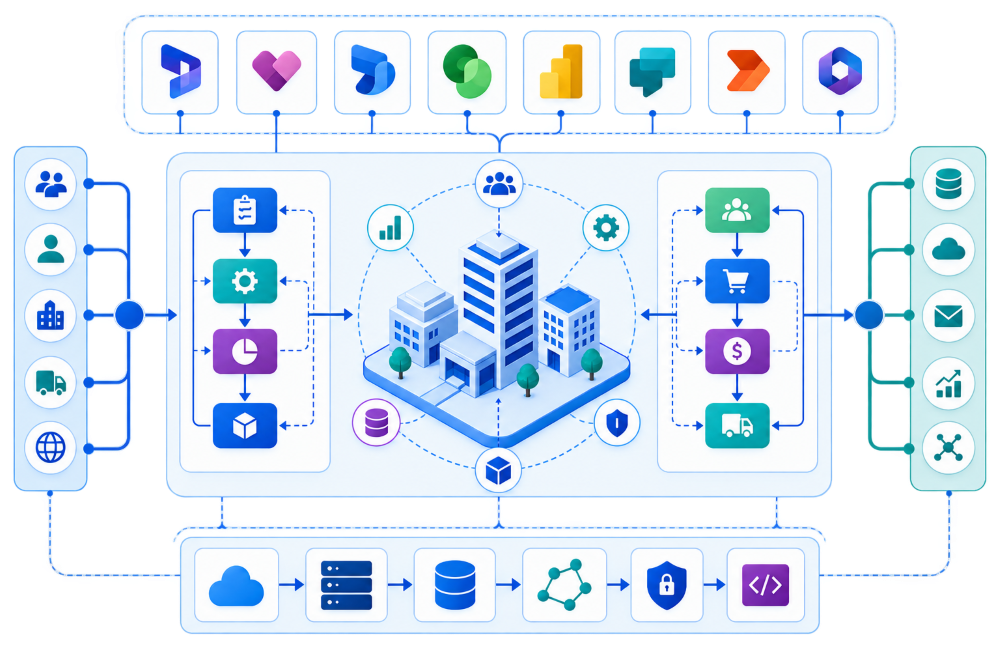
Isometrisch IT-ecosysteem diagram

See Your Enterprise Before You Change It

Connect business capabilities, processes, applications, and technology in one shared enterprise view. Understand dependencies, assess the impact of change, and make better-informed transformation decisions with Mavim.