AI AGENTS

Design AI Agents Around How Your Business Actually Works

Move from isolated AI experiments to agent-enabled business processes. Mavim helps you identify where AI agents add value, redesign how humans and agents work together, and maintain the process context needed to scale AI across your organization.

THE CHALLENGE

When AI Starts Acting, Processes Need to Keep Up

AI is moving from assistance to action. Agents can analyze information, make decisions, initiate workflow steps, and perform tasks that were previously handled by people.

But introducing AI agents into business processes raises a critical question: where should agents act, and where should people remain in control?

Without clear process context, organizations risk automating work without fully understanding the decisions, roles, dependencies, and controls involved. As AI takes on more responsibility, processes must define how humans and agents work together.

From Automation to Accountability

Successful agentic AI requires more than identifying tasks to automate. Organizations need to understand:

checklistWhere agents add value and which activities should remain human-led

checklistHow decisions are governed, including approvals and escalation paths

checklistWhich controls apply when agents take or recommend actions

checklistWhat changes downstream when responsibilities shift from people to AI

Agentic AI is not simply a technology deployment. It changes how work gets done.

THE SHIFT TO AGENTIC AI

From AI Assistants to Agentic Organizations

Enterprise AI is evolving from assisting people with work to participating in the work itself. AI agents can perform activities, initiate actions, and become active participants in business processes.

Microsoft describes this emerging model as the Frontier Firm: an organization where humans and AI agents work together while maintaining transparency, governance, and control.

Business processes provide the connecting layer. They define how people, agents, applications, decisions, and controls come together, creating the structure needed to introduce AI agents responsibly and at scale.

The future of work is not human or AI. It is about designing processes where each performs the work they are best suited to do. 

PROCESS-FIRST AI

Design AI Agents Around Your Business Processes

AI agents should not be designed in isolation. They need a clear understanding of the processes they become part of and the people, systems, decisions, and controls they interact with.

Mavim provides the process blueprint for designing this new division of work. Starting from your existing business processes, teams can redesign how work should flow and determine which activities remain human-led and which can be supported or performed by AI agents.

Make Human-Agent Collaboration Visible

Within Mavim, AI agents can be modeled as participants in business processes alongside existing roles and functions. This makes it possible to visualize where agents operate, what activities they perform, and how responsibilities shift between people and AI.

The result is a shared blueprint for moving from today's way of working to an agent-enabled operating model, without losing sight of the broader process.

Instead of adding AI to individual tasks, Mavim helps you design how agents fit into the way your organization works.

HOW IT WORKS

From Business Process to Agent-Enabled Process

Mavim provides a structured way to introduce AI agents into the way work actually gets done. Start with your existing process, determine where agents can add value, and redesign the flow around the right balance of human and AI participation.

Icon-Step-1

UNDERSTAND

Start with the process
Use your existing process blueprint to understand activities, roles, systems, dependencies, and controls before introducing AI.

Icon-Step-2

IDENTIFY

Find the right opportunities for agents
Identify activities where AI agents can support or perform work, while keeping human judgment and approval where they matter.

Icon-Step-3

REDESIGN

Model humans and agents together
Add AI agents alongside existing roles and assign activities to them. Visualize the future-state process so teams can clearly see who or what performs each activity.

Icon-Step-4

GOVERN

Define responsibilities and controls
Capture the context around each agent and make human oversight, decision rights, approvals, and process controls part of the redesigned operating model.

Icon-Step-5

SCALE

Manage agents across processes
Manage agents centrally and see where each agent is used across your process landscape, creating visibility as agent adoption expands.

Start with the process. Then decide where AI belongs. 

WHY PROCESS-FIRST

Turn AI Experiments Into an Enterprise Operating Model

AI agents deliver the most value when they are introduced with a clear understanding of the work they become part of. If a process is unclear, it cannot be responsibly automated with AI agents.

A process-first approach creates the structure needed to move beyond isolated use cases and introduce agents consistently across the organization.

Create clarity before automation

Understand how work happens, where decisions are made, and which roles, systems, and controls are involved before assigning work to AI.

Keep humans in the right places

Design human judgment, approvals, and escalation into the process instead of treating human oversight as an afterthought.

See the wider impact

Understand how introducing an agent affects roles, responsibilities, systems, controls, and downstream processes before making the change.

Scale with consistency

Move from individual AI initiatives toward a shared operating model in which agents are introduced and managed within the same process framework.

The goal is not to automate as much work as possible.
It is to put AI where it creates value without losing control of how the business operates. 

CONNECTED BY DESIGN

Built for the Microsoft Ecosystem

Mavim connects process intelligence with the Microsoft technologies organizations already use to design, deploy, and operate AI-enabled business processes.

microsoft-dynamics-365-seeklogo-NB

Dynamics 365 + Microsoft Business Process Catalog

Start from Microsoft’s standard business processes, adapt them to your organization, and visualize where AI agents can support or perform work across Dynamics 365 processes. 

microsoft-365-copilot-seeklogo-NB

 Microsoft Copilot + Copilot Studio

Connect AI experiences with structured process context from Mavim. Custom Copilot agents can also be embedded directly into the Mavim Portal, giving employees natural-language access to process knowledge where they work. 

microsoft-Fabric-seeklogo-NB

 
Azure + Microsoft Fabric

Combine Microsoft's secure AI and data foundation with the process context needed to understand how workflows, roles, systems, and governance fit together. 

microsoft-365-seeklogo-NB

 
Microsoft 365 + SharePoint

Extend the knowledge available to agents beyond Mavim. Through Copilot Studio, Mavim process content can be combined with external sources such as SharePoint to provide broader enterprise context. 

One Ecosystem. One Process Context.

Together, Microsoft provides the technology for AI, data, applications, and execution, while Mavim provides the structured process intelligence that connects AI initiatives to how the organization actually works.

Build agents in the Microsoft ecosystem. Design how they work across the enterprise with Mavim.

AI AGENTS IN ACTION

How Organizations Can Use AI Agents

AI agents can take on different roles across the enterprise, from handling repetitive tasks to supporting decisions and coordinating complex workflows. Mavim helps organizations identify these opportunities within their existing processes and visualize how work changes when agents become part of the team.

EXPLORE THE USE CASES

See Agent-Enabled Processes in Action

Sales

mavim-sales-qualification-2m37-3m59

Qualify Leads and Focus Sellers on the Right Opportunities

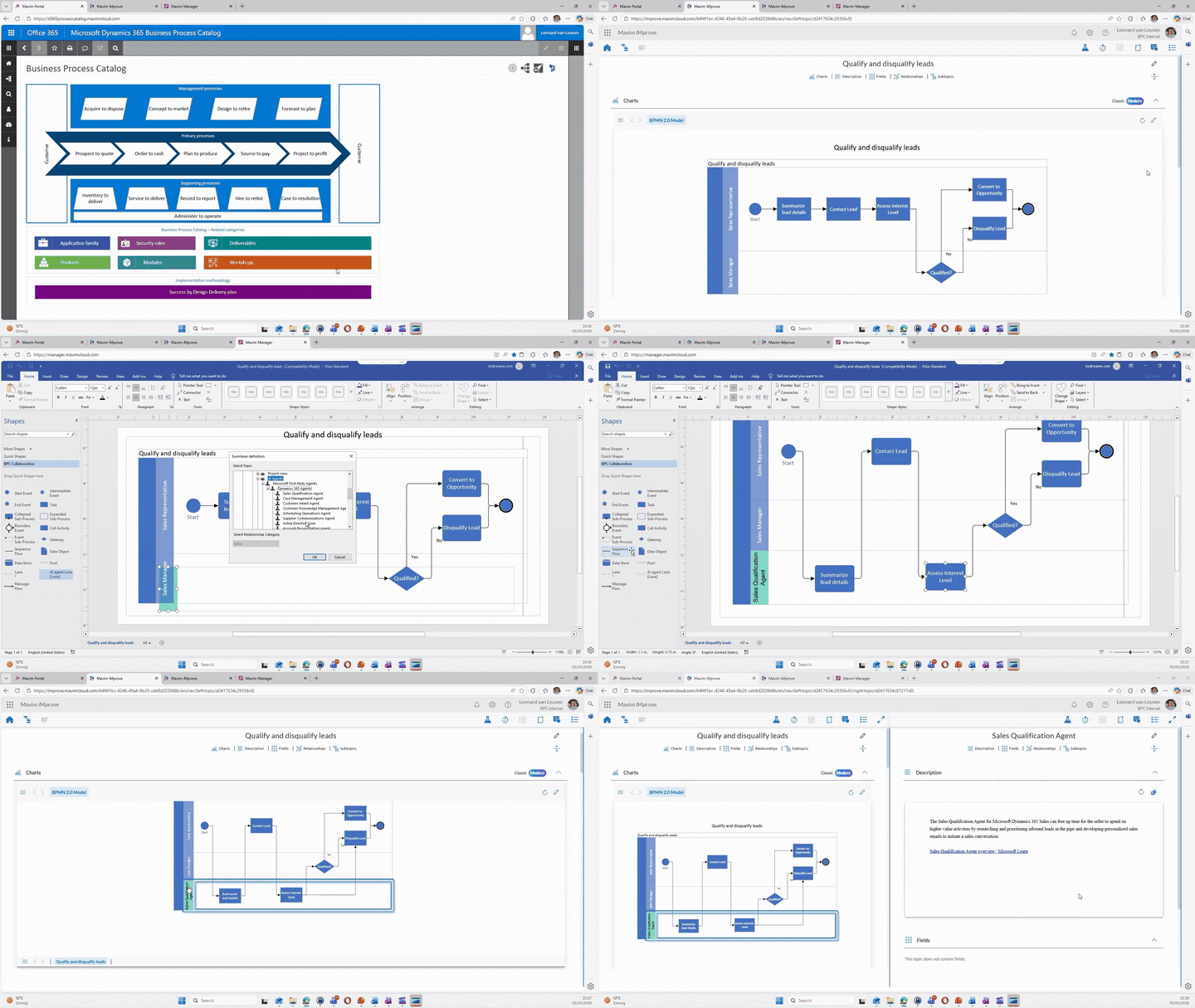
A Sales Qualification Agent can monitor incoming leads, assess engagement and intent, and identify the prospects most likely to convert. Instead of spending time manually reviewing every lead, sellers can focus their attention where human interaction adds the most value.

In Mavim, organizations can visualize which activities shift to the agent and how the redesigned process changes responsibilities across the sales team.

Finance

mavim-finance-processes-2m31-3m48-fast

Automate Reconciliation While Keeping Exceptions Human-Led

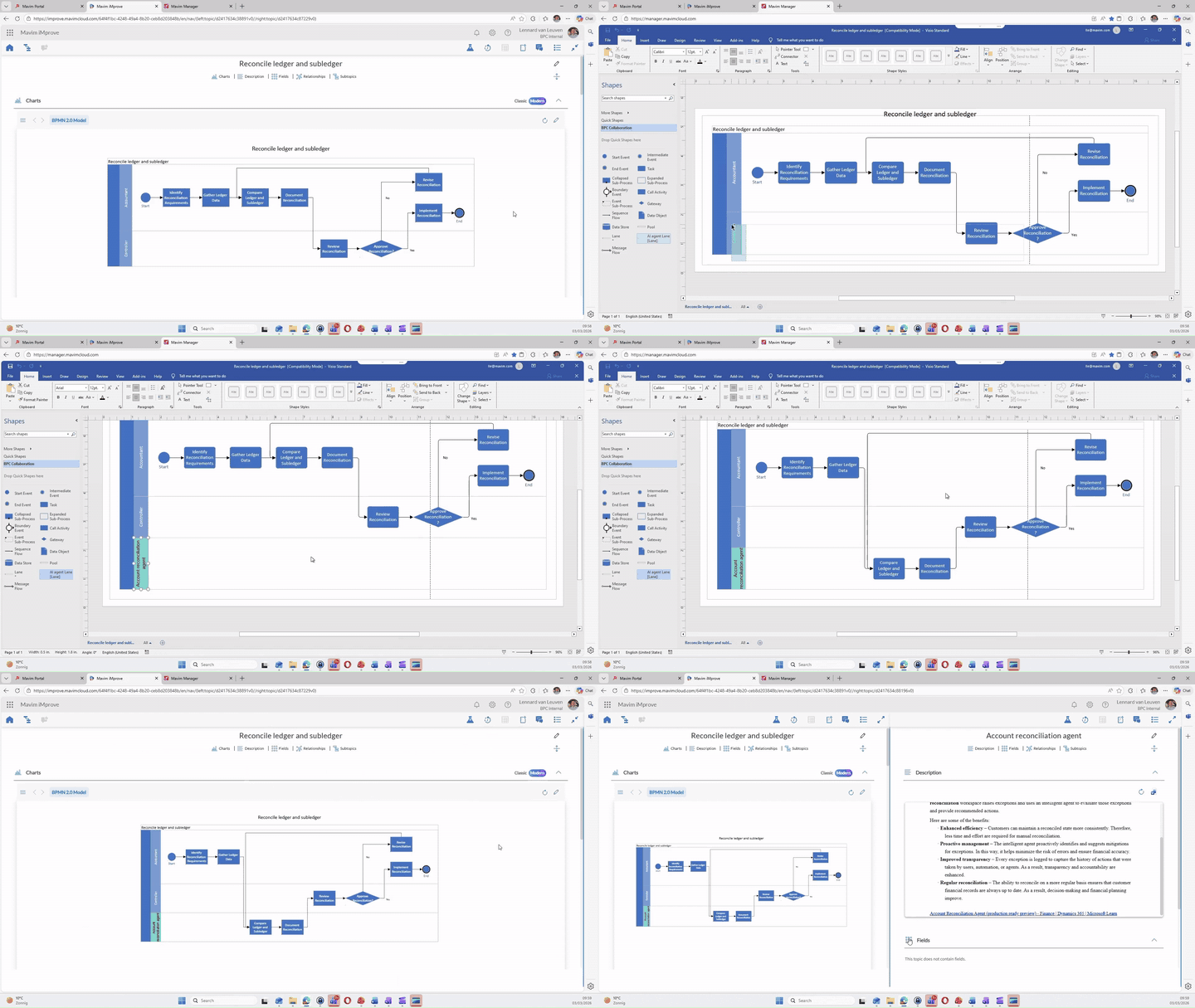
A Finance Reconciliation Agent can continuously monitor transactions, match records, identify discrepancies, and handle routine reconciliation activities.

Exceptions that require judgment or investigation remain with finance professionals, creating a hybrid process that combines automation with human oversight.

Field Service

mavim-field-service-2m31-4m06-fast

Coordinate Scheduling Across Multiple Specialized Agents

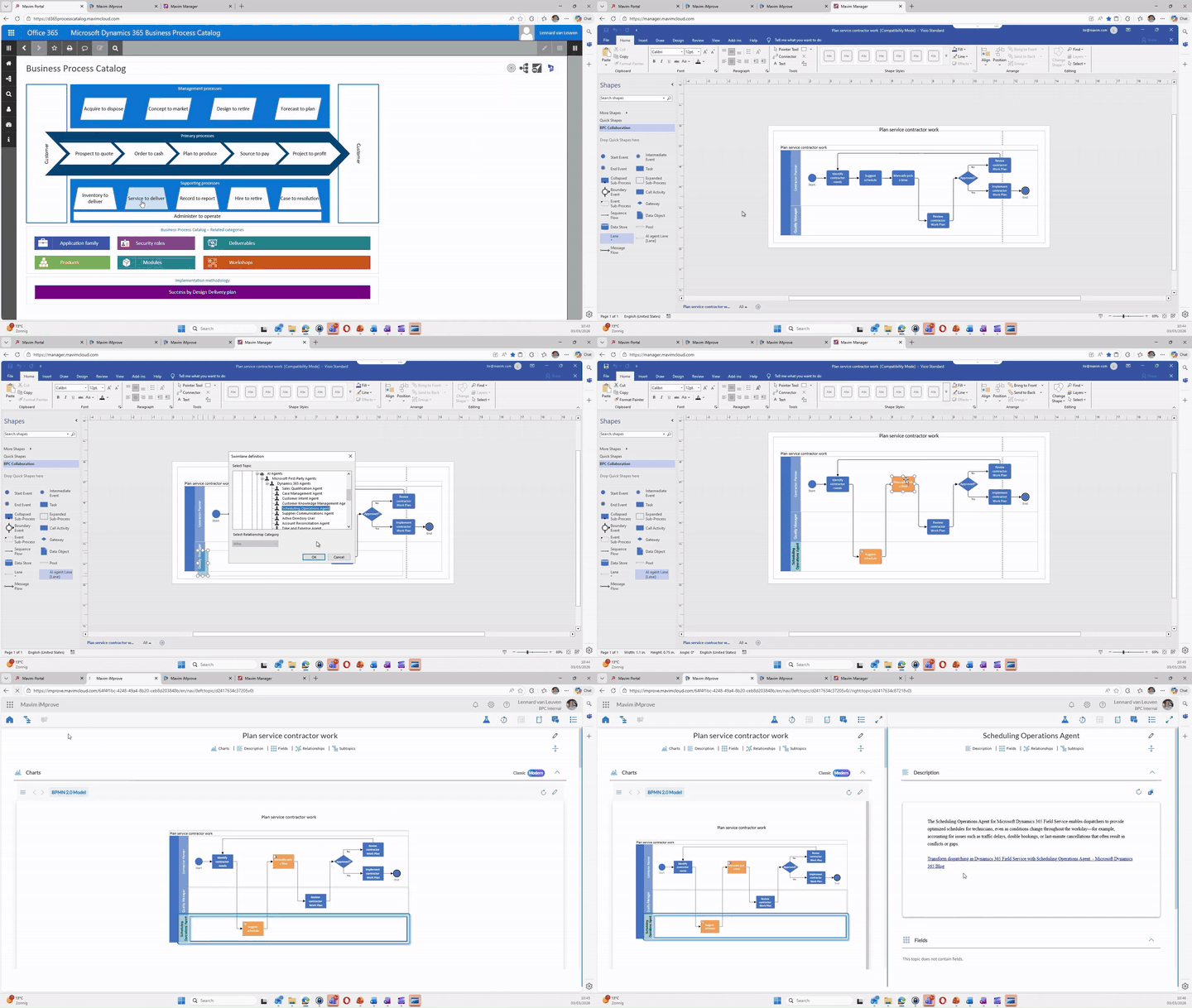
Field service processes can use multiple agents for different parts of the workflow. Agents can help interpret incoming requests, assess urgency, determine required skills, identify suitable technicians, and optimize scheduling based on availability and travel time.

Mavim makes these agent interactions visible within the end-to-end process, including where human review remains required.

Customer Service

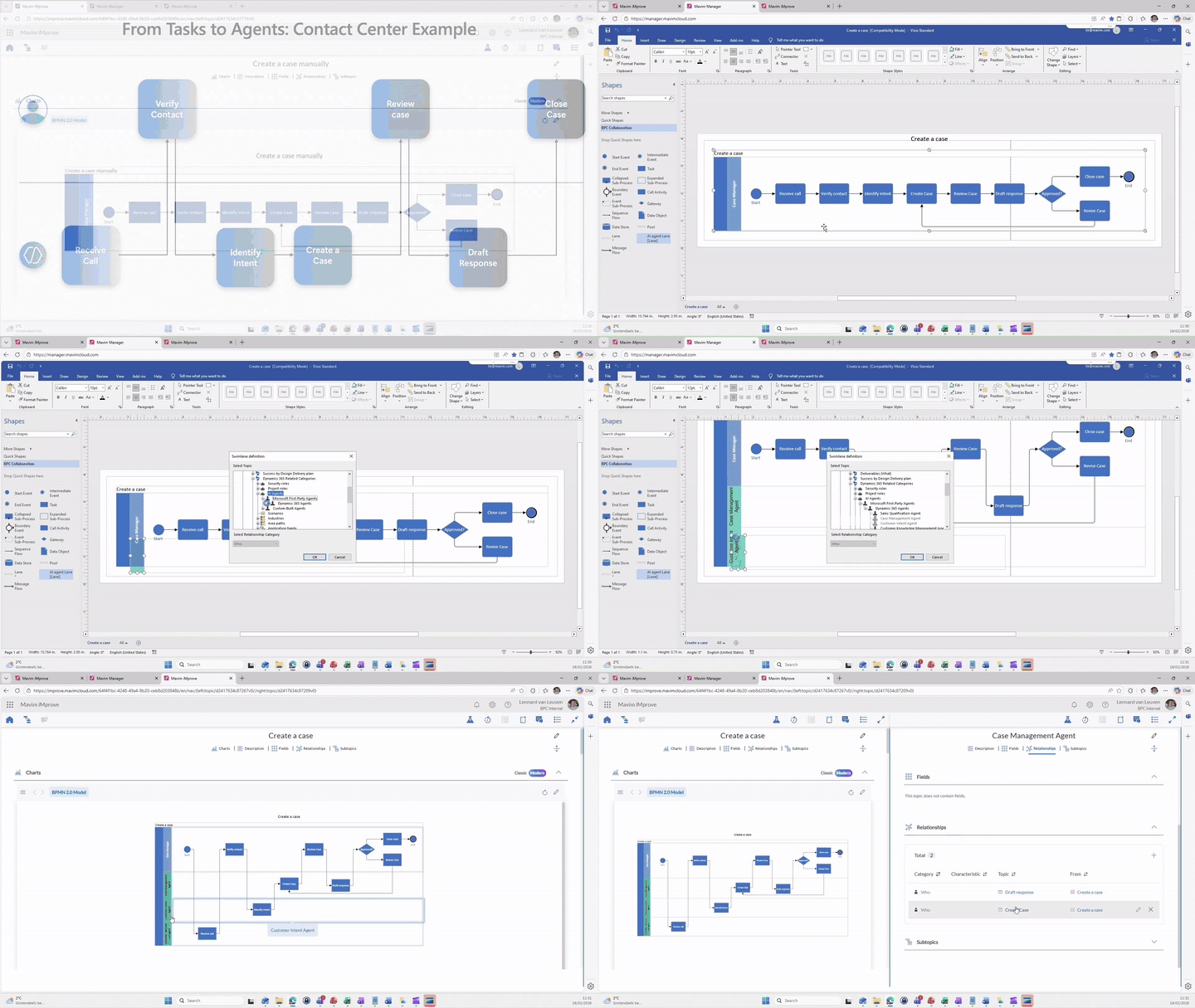
mavim-contact-center-2m59-4m41-fast

Let Agents Handle Routine Case Work

In the contact center, agents can support activities such as case creation, intent identification, and response drafting, while employees verify information, apply judgment, and complete customer interactions.

Rather than automating the entire process, organizations can introduce specialized agents at specific steps and redesign the workflow around effective human-agent collaboration.

mavim-sales-qualification-2m37-3m59

Qualify Leads and Focus Sellers on the Right Opportunities

A Sales Qualification Agent can monitor incoming leads, assess engagement and intent, and identify the prospects most likely to convert. Instead of spending time manually reviewing every lead, sellers can focus their attention where human interaction adds the most value.

In Mavim, organizations can visualize which activities shift to the agent and how the redesigned process changes responsibilities across the sales team.

mavim-finance-processes-2m31-3m48-fast

Automate Reconciliation While Keeping Exceptions Human-Led

A Finance Reconciliation Agent can continuously monitor transactions, match records, identify discrepancies, and handle routine reconciliation activities.

Exceptions that require judgment or investigation remain with finance professionals, creating a hybrid process that combines automation with human oversight.

mavim-field-service-2m31-4m06-fast

Coordinate Scheduling Across Multiple Specialized Agents

Field service processes can use multiple agents for different parts of the workflow. Agents can help interpret incoming requests, assess urgency, determine required skills, identify suitable technicians, and optimize scheduling based on availability and travel time.

Mavim makes these agent interactions visible within the end-to-end process, including where human review remains required.

mavim-contact-center-2m59-4m41-fast

Let Agents Handle Routine Case Work

In the contact center, agents can support activities such as case creation, intent identification, and response drafting, while employees verify information, apply judgment, and complete customer interactions.

Rather than automating the entire process, organizations can introduce specialized agents at specific steps and redesign the workflow around effective human-agent collaboration.

WHY MAVIM

Build the Foundation for Agentic Transformation

Introducing AI agents is not just about automating individual tasks. Organizations need a shared process foundation to understand where agents belong, redesign how work gets done, and maintain visibility as AI adoption grows.

Mavim brings that foundation together.

  • Enterprise Process Context: Connect agents to the processes, roles, systems, decisions, and dependencies that define how your organization operates.
  • Visual Human-Agent Redesign: Model agents alongside employees and visualize how responsibilities shift as AI becomes part of the process.
  • Governance by Design: Make decision rights, human approvals, controls, and escalation paths visible within the processes agents participate in.
  • Centralized Agent Visibility: Manage agents as roles and see where they are used across the process landscape, helping teams maintain oversight as adoption expands.
  • Connected to Microsoft: Align agent-enabled processes with Dynamics 365 and the Microsoft Business Process Catalog while connecting process intelligence to the broader Microsoft ecosystem.
  • Designed to Scale: Move from individual agent use cases toward a consistent enterprise approach for introducing AI across processes and business functions.
CUSTOMER STORY

KIWA: Processes First. AI Second.

KIWA is building its foundation for AI-driven transformation by first creating clarity across processes, business rules, governance, and data. Rather than introducing AI agents immediately, the organization aligned its processes with Microsoft’s Business Process Catalog and assessed Dataverse readiness before exploring targeted agent scenarios.

The approach reflects a simple principle:

Technology cannot fix broken or undefined processes. Reshape the process first, then determine where AI can create value.

LEARN MORE
RECOMMENDED RESOURCES

Explore Agentic AI in Practice

Explore practical guidance, real-world examples, and Microsoft-focused insights to help your organization move from AI experimentation toward process-driven agentic transformation.

AI AGENTS FAQ

Frequently Asked Questions About AI Agents and Business Processes

Learn how AI agents work within business processes, why process context and governance matter, and how Mavim helps organizations design agent-enabled ways of working.

What are AI agents?

AI agents are software-based actors that can perform tasks, make recommendations, initiate actions, and participate in workflows with varying levels of autonomy. Unlike AI assistants that primarily help people complete tasks, AI agents can take responsibility for specific activities within a business process.

How do AI agents work with business processes?

AI agents can participate in business processes alongside employees, applications, and other agents. They may perform individual activities, support decisions, or coordinate parts of a workflow. Clear process models help define where agents participate, what they are responsible for, and where human involvement remains necessary.

How do you identify which processes are suitable for AI agents?

Start with the business process rather than the technology. Look for activities that are repetitive, high-volume, costly, or decision-heavy, then assess the business rules, data, dependencies, controls, and human judgment involved. The goal is not to automate everything, but to identify where agents can create measurable value without compromising control.

Why is process governance important for AI agents?

As AI agents take on more responsibility, organizations need clear decision rights, controls, approval requirements, and escalation paths. Process governance provides the structure for defining what an agent can do, when human intervention is required, and how automated actions remain aligned with policies and operational intent.

How does Mavim support AI agents?

Mavim helps organizations design AI agents around their business processes. Teams can model agents as process participants, assign activities to them, visualize human-agent collaboration, and see where agents are used across the process landscape. This provides a shared process blueprint for introducing and scaling agents across the organization.

How does Mavim work with Microsoft Copilot and Copilot Studio?

Mavim provides structured process intelligence that can give Microsoft AI solutions additional enterprise context. Custom Copilot agents can also be embedded in the Mavim Portal and, through Copilot Studio, combine Mavim process knowledge with other enterprise sources such as SharePoint.

Can Mavim support AI agents in Microsoft Dynamics 365 processes?

Yes. Mavim can use Microsoft Business Process Catalog processes as a starting point for modeling and redesigning Dynamics 365 workflows. Organizations can identify activities suitable for agents, assign agents as process roles, and visualize the resulting future-state process while maintaining visibility into human responsibilities and dependencies.

READY TO GET STARTED?

Design Where AI Agents Belong in Your Business

AI agents can change how work gets done, but lasting value starts with understanding the processes they become part of.

See how Mavim helps you identify the right opportunities for AI, redesign processes around human-agent collaboration, and create the process foundation for scaling agentic AI across your organization.


Start with your processes. Design for AI. Scale with confidence.