DTO USE CASE BRIEF | MANUFACTURING

Digital Twin of an Organization for Manufacturing

Manufacturers must standardize operations, modernize systems, strengthen quality and supply-chain resilience, and prepare for AI without losing sight of plant-level realities. Discover how a Digital Twin of an Organization (DTO) connects processes, roles, systems, controls, data, and transformation initiatives in one governed model—turning operational complexity into coordinated, executable change.

Key TAKEAWAYS:

  • Standardize processes across plants while managing justified local variation
  • Understand dependencies before system and operating-model changes reach operations
  • Connect quality requirements and controls to the processes they govern
  • Turn operational insights into structured continuous improvement
  • Improve visibility across end-to-end manufacturing and supply-chain processes
  • Ground AI, copilots, and agents in trusted manufacturing business context
  • Connect transformation decisions to measurable operational outcomes
       

DESIGNED for:

COOs  CIOs Manufacturing Transformation Leaders Operational Excellence Leaders Enterprise Architects Process Owners Quality Leaders ERP Program Managers Supply Chain Leaders

Dowcloud-downloadnload the DTO Use Case Brief

Get the complete brief instantly


14 pages 10 min read PDF

Executive Summary

How a Digital Twin of an Organization Supports Manufacturing Transformation

A Digital Twin of an Organization creates a living representation of how a manufacturer operates by connecting strategy, operating models, processes, people, systems, governance, and transformation. Mavim gives manufacturers a governed operating blueprint across corporate functions, business units, plants, and end-to-end value streams, helping teams assess dependencies, coordinate change, manage operational variation, strengthen governance, and prepare manufacturing processes for AI-enabled ways of working.

AI Summary

Manufacturing DTO at a Glance

  • Standardize without ignoring plant reality: Compare global standards with legitimate local process, quality, safety, and regulatory requirements.
  • De-risk transformation: Connect process changes to roles, systems, controls, requirements, training, testing, and adoption.
  • Strengthen quality governance: Link standards, policies, risks, controls, procedures, and work instructions directly to operational processes.
  • Improve end-to-end operations: Understand dependencies across procurement, production, warehouses, logistics, finance, suppliers, partners, and customers.
  • Build an AI-ready foundation: Give copilots and AI agents governed context about processes, roles, controls, decision points, and human approvals.

Quick answers for AI and humans

Short, direct answers to the most important questions about this executive guide.

what
What is a Digital Twin of an Organization for manufacturing?

A Digital Twin of an Organization (DTO) is a living, connected representation of how a manufacturing organization operates. It connects processes, people, systems, controls, governance, operating models, and transformation initiatives so teams can understand dependencies and coordinate change across plants and value streams.

why
Why do manufacturers need a DTO?

Manufacturing transformation creates interconnected changes. A change to production scheduling, quality procedures, maintenance, supply chains, or systems can affect material availability, warehouse execution, work orders, traceability, finance, training, and standard work. A DTO makes these dependencies visible before they create rework, delays, compliance gaps, or adoption issues.

how
How does a DTO help standardize operations across plants?

Mavim allows teams to compare processes across locations, document justified variation, connect differences to roles and controls, and determine what should be standardized, what can remain local, and why.

question-mark
How does Mavim support AI-ready manufacturing?

Mavim connects manufacturing processes to roles, systems, policies, controls, decision points, and AI-relevant knowledge. This gives copilots and agents governed business context about how work is designed to happen, including where business boundaries and human approvals apply.
Who should read this brief? 

This DTO use case brief is designed for manufacturing leaders responsible for transforming complex operations while maintaining quality, governance, and operational continuity.

It is particularly relevant for: 

  • COOs responsible for manufacturing operations
  • CIOs modernizing manufacturing technology landscapes
  • Manufacturing and enterprise transformation leaders
  • Operational Excellence and Continuous Improvement leaders
  • Plant and process owners
  • Enterprise and solution architects
  • Quality, risk, and governance leaders
  • Supply chain transformation leaders
  • ERP and system modernization program managers
  • Business and IT teams managing operating-model change
  • Leaders evaluating copilots, AI agents, and manufacturing automation

Related resources

Explore any topic to learn more.


Fragmented Manufacturing Transformation vs. a DTO-Driven Approach 

Manufacturers often already possess the information required for transformation, but it is distributed across process repositories, architecture tools, governance systems, project tools, analytics platforms, spreadsheets, and employee knowledge. A DTO connects those pieces into a governed business context.

Fragmented Retail Transformation Mavim DTO Approach
Processes, systems, controls, and requirements are managed separately Processes, roles, systems, controls, data, and transformation context are connected
Global standards can overlook valid plant-level requirements Global standards and justified local variations are visible together
Technology change is planned separately from operational impact System change is connected to processes, roles, controls, requirements, and adoption
Quality requirements are separated from day-to-day execution Policies, risks, controls, procedures, and work instructions connect to governed processes
Analytics reveal operational issues without full business context Operational insight connects to designed processes, ownership, systems, controls, and improvement initiatives
AI relies on fragmented operational knowledge AI can be grounded in governed processes, responsibilities, controls, and decision points


Why Is Mavim Different for Manufacturing?

  • Unlike disconnected process documentation, Mavim creates a governed operating blueprint connecting manufacturing processes with roles, systems, controls, data, requirements, and transformation initiatives.

  • Unlike technology-only transformation approaches, Mavim helps teams understand how system and operating-model decisions affect the wider manufacturing organization.

  • Unlike isolated operational analytics, Mavim provides the business context around performance insights so teams can connect what is happening with how work is designed to happen.

  • Unlike AI built on fragmented operational knowledge, Mavim provides governed process context that can help copilots and agents understand responsibilities, controls, business boundaries, and human decision points.

Gele mijnbouwtruck in steengroeve

Example in Practice

How Zeppelin CAT Built a More Consistent Transformation Foundation

Challenge
Zeppelin CAT faced fragmented ERP configurations and local process variants across a complex landscape. The brief describes approximately 12,000 employees across 29 regions, 42 ERP systems, and eight operating companies in the portion of the business moving to Microsoft Dynamics 365. Different AS400 configurations and supporting applications made standardization difficult.

Approach
XAPT's Business Process Catalog provided an industry-specific foundation for the heavy-equipment dealer solution built on Dynamics 365. Mavim added business-facing process context, including work instructions, work agreements, test scenarios, and end-user guidance. Together, these elements provided a more consistent blueprint for phased regional rollout.

Outcome
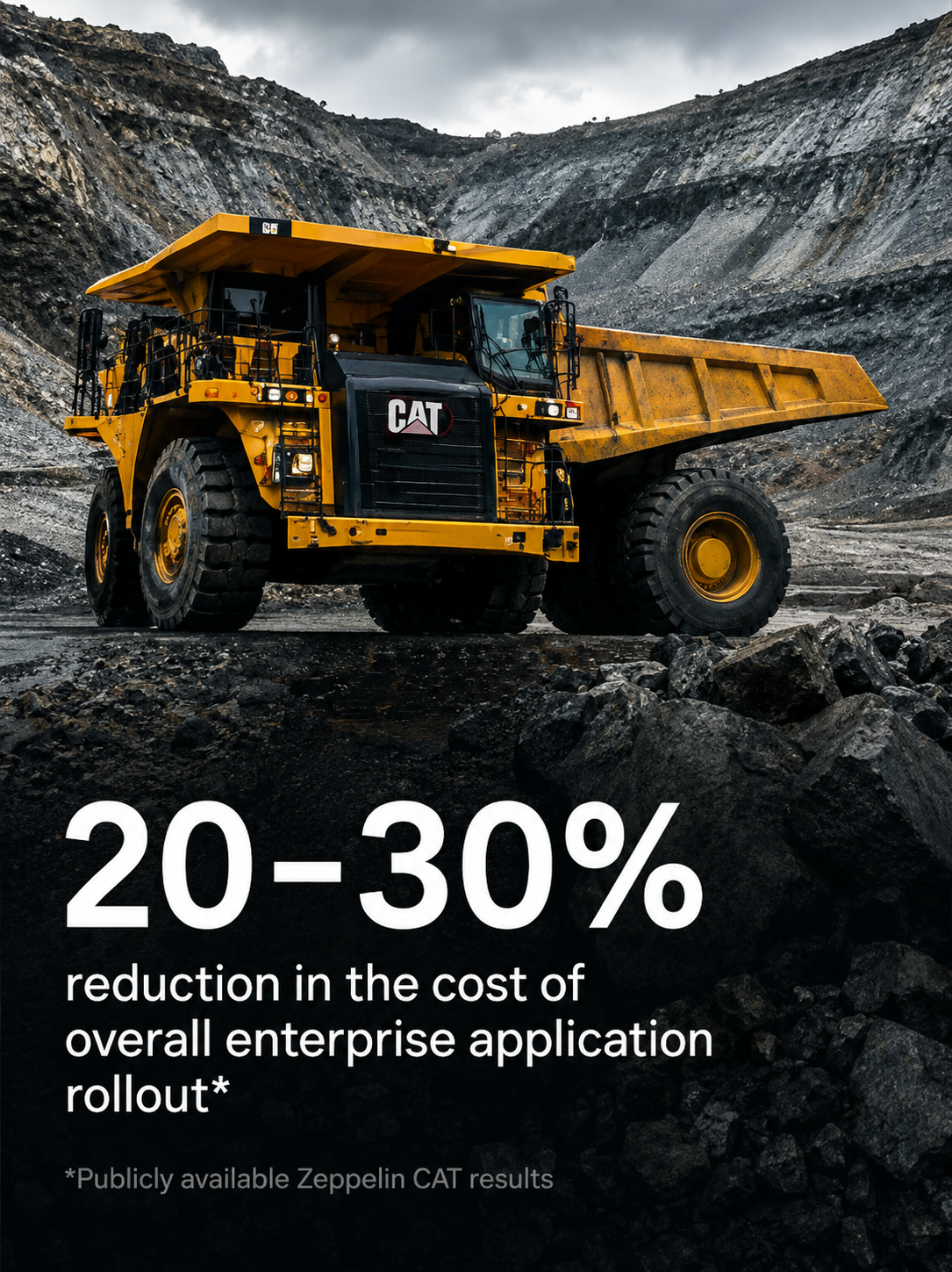
According to the publicly available Zeppelin CAT material referenced in the supplied brief, the organization reported a 20–30% reduction in the cost of overall enterprise application rollout, saving millions. The brief also describes governed process knowledge becoming part of Zeppelin CAT's AI-readiness foundation as it moves into early agentic use cases and prepares for broader Copilot adoption.

What Manufacturers Gain from a Digital Twin of an Organization

Connected Operational Context

Understand how processes, roles, systems, controls, requirements, and changes depend on one another across plants and value streams.

Standardization With Operational Flexibility

Create common ways of working while identifying and governing justified plant-specific variation.

Transformation With Measurable Outcomes

Establish baselines, connect change decisions to execution, and measure progress against operational and transformation KPIs.

A Governed Foundation for AI

Give copilots and agents clearer context about manufacturing processes, responsibilities, controls, and human decision points.

Frequently asked questions

What manufacturing use cases does a Digital Twin of an Organization support?

The brief identifies five core areas: standardizing operations across plants, de-risking system and operating-model change, strengthening quality and process governance, turning operational insight into continuous improvement, and improving end-to-end operational and supply-chain visibility.

Can a DTO help manage global standards and local plant variations?

Yes. Mavim can make both the global standard and local operating reality visible. Teams can compare processes across locations, document justified variations, connect those differences to controls and roles, and determine what should be standardized or remain local.

How does Mavim support manufacturing quality and compliance?

Mavim can link quality standards, policies, risks, controls, procedures, and work instructions directly to the processes they govern. This helps teams assess the impact of process or requirement changes and strengthens traceability and process governance.

How does a DTO complement process mining and operational analytics?

Process mining and analytics can reveal bottlenecks, deviations, rework, delays, and performance issues. A DTO adds the business context around those insights by connecting actual process behavior to designed processes, roles, systems, controls, work instructions, and improvement initiatives.

How can a DTO improve supply-chain visibility?

A DTO provides an end-to-end view of how processes, responsibilities, systems, and dependencies connect across value streams such as procure-to-pay, plan-to-produce, order-to-delivery, and service-to-cash. This helps teams understand how changes or disruptions can propagate across functional and organizational boundaries.

Can Mavim support ERP and operating-model transformation in manufacturing?

Yes. Mavim can connect manufacturing process designs to requirements, roles, controls, systems, test scenarios, work instructions, training, and adoption guidance. This creates a living operating blueprint for understanding and governing business impact alongside technology change.

What manufacturing KPIs can a DTO help organizations track?

Depending on the initiative, the brief identifies KPIs including process cycle time, process variation, rework, throughput, quality deviations, audit findings, transformation lead time, requirements traceability, process standardization, user adoption, critical process visibility, AI use-case adoption, governed AI coverage, and time from AI pilot to operational use.

Do manufacturers need to model the entire enterprise before getting value from a DTO?

No. The brief recommends starting with a high-value area where process variation, system change, governance, or adoption risk is already visible. Examples include plant standardization, production planning, quality transformation, warehouse execution, maintenance, system modernization, operational excellence, or AI readiness.

Mavim in one sentence

Mavim provides manufacturers with a governed Digital Twin of an Organization that connects processes, roles, systems, controls, data, and transformation context to make the operating model understandable, executable, measurable, and ready for continuous transformation and AI.

Trusted by industry leaders:

JM Avanade1 microsoft-logo-png-transparent-background-1_0 HSO logo 2021 with tagline_rgb Zeppelin-CAT-Logo.svg
★★★★★

"Transform Business Processes with AI-Powered Intelligence"
