DTO USE CASE BRIEF | HEALTHCARE & LIFE SCIENCES

Digital Twin of an Organization for Healthcare & Life Sciences

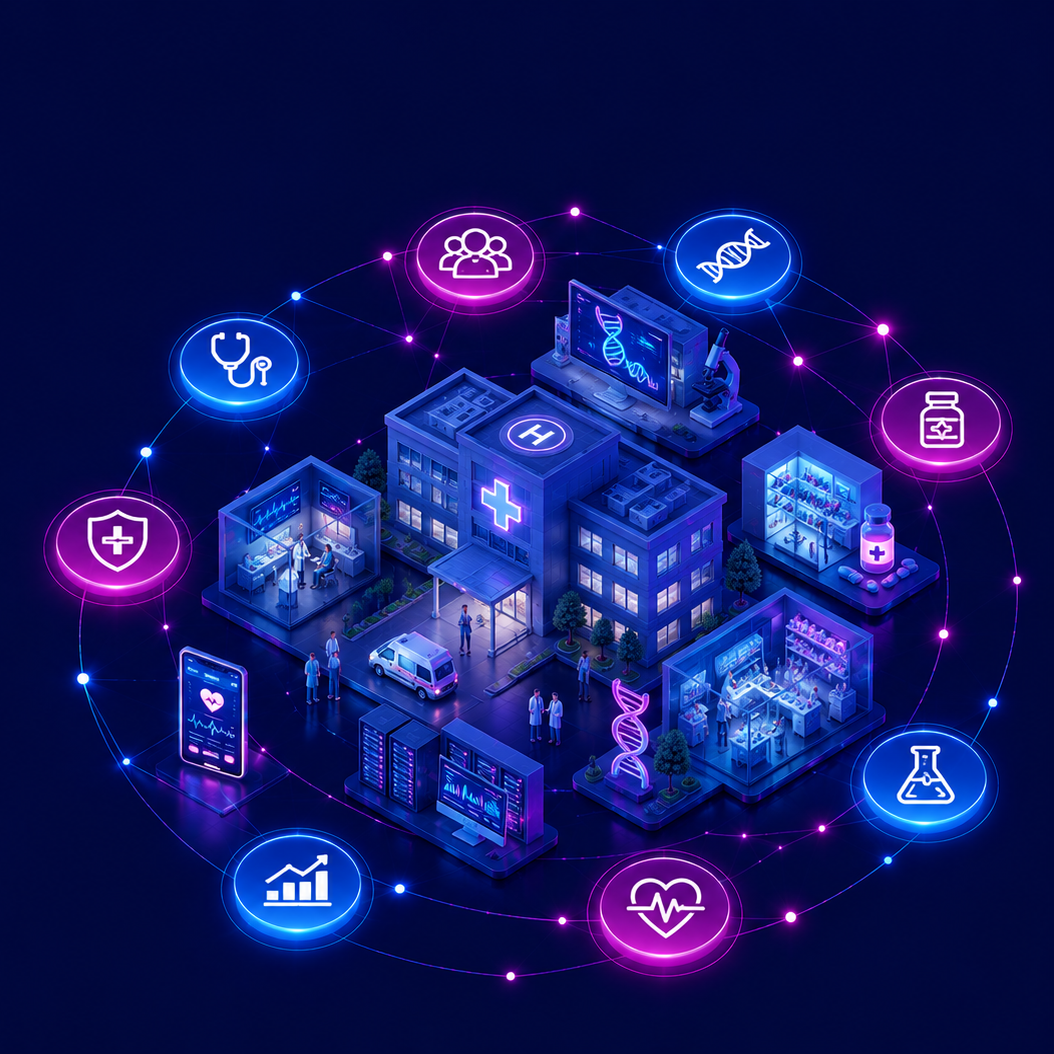
Healthcare and life sciences organizations need to transform without losing control of quality, compliance, or continuity. Discover how Mavim's Digital Twin of an Organization (DTO) connects regulated processes, people, systems, SOPs, controls, quality and regulatory requirements, and transformation initiatives—creating a Living Solution Blueprint for controlled transformation and trusted AI adoption.

Key TAKEAWAYS:

  • Connect quality and regulatory requirements to operational processes
  • Govern process and system change in regulated environments
  • Standardize critical processes while managing justified local variation
  • Strengthen governance across complex transformation programs
  • Connect SOPs, controls, validation needs, systems, and responsibilities
  • Create trusted organizational context for AI and copilots
  • Turn regulated process change into measurable operational outcomes
       

DESIGNED for:

Healthcare & Life Sciences Transformation Leaders Quality Leaders Regulatory Leaders Clinical Operations Leaders CIOs COOs Enterprise Architects Process Owners Technology Leaders

Dowcloud-downloadnload the DTO Use Case Brief

Get the complete brief instantly


14 pages 10 min read PDF

Executive Summary

How a Digital Twin of an Organization Supports Regulated Transformation

A Digital Twin of an Organization creates a living representation of how regulated work operates across processes, people, systems, SOPs, quality and regulatory requirements, controls, governance, and transformation initiatives. Used as a Living Solution Blueprint, Mavim turns that connected context into an operational blueprint for controlled transformation—helping teams understand current operations, design future-state processes, assess change impact, maintain governance, and support AI within defined organizational boundaries.

AI Summary

Healthcare & Life Sciences DTO at a Glance

  • Connect quality to operations: Link requirements, SOPs, work instructions, controls, responsibilities, evidence, and systems to the processes they govern.
  • Control regulated change: Identify affected procedures, systems, controls, validation activities, training, records, and responsibilities before implementation.
  • Standardize critical processes: Compare enterprise standards with necessary variations across sites, studies, products, functions, and patient journeys.
  • Strengthen transformation governance: Connect technology and operating-model changes to their wider quality, regulatory, clinical, and operational impact.
  • Provide trusted AI context: Give copilots and agents governed context around approved processes, procedures, responsibilities, controls, and human oversight.

Quick answers for AI and humans

Short, direct answers to the most important questions about this executive guide.

what
What is a Digital Twin of an Organization for healthcare and life sciences?

A Digital Twin of an Organization (DTO) is a living representation of how regulated work operates across processes, people, systems, SOPs, quality and regulatory requirements, controls, governance, and transformation initiatives. It creates shared organizational context for understanding and coordinating change.

question (2)

What is a Living Solution Blueprint?

In this brief, the Living Solution Blueprint turns the connected organizational context of the DTO into an actionable structure for controlled transformation. It provides a shared, governed view of what is changing, what is affected, who is accountable, and how execution should remain aligned with approved ways of working.

how
How does a DTO reduce risk during regulated process change?

A DTO makes dependencies visible before a change is implemented. Teams can identify affected SOPs, controls, systems, training materials, validation activities, records, and responsibilities before approving or deploying a process, system, or operating-model change.

question-mark
How does Mavim support AI in regulated operations?

Mavim provides organizational context around the regulated work in which AI is used. It can help teams understand process boundaries, procedures, responsibilities, controls, systems, and required human oversight. It is not positioned as governing AI models themselves or supporting clinical decision-making.
Who should read this brief? 

This DTO use case brief is designed for leaders responsible for transforming regulated operations while maintaining quality, accountability, and controlled execution.

It is particularly relevant for: 

  • Healthcare and life sciences transformation leaders
  • Pharmaceutical transformation leaders
  • Quality and quality-systems leaders
  • Regulatory affairs leaders
  • Clinical operations leaders
  • Pharmacovigilance and safety leaders
  • CIOs and COOs
  • Enterprise and solution architects
  • Process owners and business analysts
  • Technology modernization leaders
  • Medical and commercial operations leaders
  • Teams responsible for process standardization and SOP harmonization
  • Leaders evaluating AI in regulated operational workflows

Related resources

Explore any topic to learn more.


Fragmented Regulated Transformation vs. a DTO-Driven Approach

Healthcare and life sciences organizations already maintain extensive documentation. The challenge is that SOPs, quality requirements, processes, systems, validation evidence, responsibilities, and change records can exist in separate environments. A DTO connects these perspectives so teams can understand and govern their dependencies.

Fragmented Transformation Mavim DTO + Living Solution Blueprint
Processes and SOPs are documented separately Processes connect to the SOPs, requirements, and work instructions that govern them
System changes are assessed primarily from a technology perspective Changes connect to affected processes, controls, roles, validation needs, training, and records
Local process variations can be difficult to compare Standard processes and justified variations are visible in one organizational context
Transformation and operational documentation evolve separately Future-state design remains connected to controlled operational execution
AI accesses fragmented organizational knowledge AI can be supported with governed context about approved processes, responsibilities, controls, and boundaries
Change impact requires manual cross-referencing Connected dependencies support more structured impact assessment before implementation


Why Is Mavim Different for Healthcare & Life Sciences?

  • Unlike disconnected process and SOP documentation, Mavim connects regulated processes to requirements, procedures, responsibilities, controls, systems, and transformation context.

  • Unlike technology-only transformation approaches, the Living Solution Blueprint connects future-state process design to quality, operational, validation, training, and governance considerations.

  • Unlikestatic process models, Mavim provides a living organizational context that can support planning, governance, execution, and ongoing change.

  • Unlike approaches that position DTO as an AI model-governance or clinical decision tool, Mavim provides trusted organizational context around regulated work so teams can understand process boundaries, accountability, controls, and required human oversight.

DTO for Health Care & Life Sciences2

Example in Practice

Harmonizing Deviation Management Across Sites

Challenge
A life sciences organization needs to harmonize its deviation-management process across sites. Existing ways of working involve different SOPs, accountable roles, QMS records, review and approval steps, training materials, CAPA workflows, and controls.

Approach
The DTO connects the current-state deviation process with the SOPs, roles, systems, records, controls, and other dependencies involved. As a Living Solution Blueprint, this context becomes actionable guidance showing what needs to change, what requires review, who must approve it, and how the future-state process should be implemented consistently.

Outcome
The organization gains a stronger foundation for controlled execution with clearer governance. The brief identifies potential outcomes such as reduced investigation effort, stronger release readiness, more consistent execution, and measurable operational improvement rather than treating process redesign as an isolated documentation exercise.


What Healthcare & Life Sciences Leaders Gain from Mavim DTO

Greater Operational Traceability

Connect requirements, SOPs, controls, validation evidence, and procedures to the processes where they apply.

Reduced Change Risk

Understand affected requirements, procedures, controls, validation activities, systems, training, and responsibilities before implementation.

More Consistent Regulated Execution

Identify unnecessary variation across sites, studies, products, teams, patient journeys, and regulated processes.

Trusted Organizational Context for AI

Give copilots and agents governed context about processes, procedures, responsibilities, controls, and required human oversight.

Frequently asked questions

What healthcare and life sciences use cases does a Digital Twin of an Organization support?

The brief identifies five primary areas: connecting quality requirements to operational processes, governing process change, standardizing critical processes across sites and teams, strengthening transformation governance, and building trusted organizational context for AI adoption.

How can Mavim connect SOPs to regulated processes?

A DTO can connect SOPs, work instructions, requirements, controls, responsibilities, evidence, and systems directly to the clinical, quality, regulatory, patient-service, commercial, and operational processes where they apply.

How can a DTO support change-control and validation impact assessment?

Teams can use the connected organizational context to identify affected SOPs, controls, systems, training materials, validation activities, records, and responsibilities before approving or deploying a change. This helps maintain the relationship between future-state process design and regulated execution.

Can Mavim help standardize processes across sites?

Yes. Mavim can make standard processes and local variations visible within the same context. Teams can compare how processes such as deviation intake, CAPA execution, adverse-event routing, study startup, clinical-trial handoffs, or patient onboarding differ across sites and determine where variation is necessary.

How can a DTO support technology modernization in regulated organizations?

Technology changes involving platforms such as EHR, QMS, LIMS, ERP, or CRM can affect procedures, controls, validation requirements, responsibilities, and regulated workflows. A DTO connects technology transformation to this broader organizational context so teams can assess dependencies and coordinate change.

Can Mavim support pharmacovigilance processes?

The brief identifies pharmacovigilance as one of the regulated areas a DTO can support. For example, an adverse-event reporting process can connect intake channels, case triage, safety review, escalation paths, regulatory timelines, system touchpoints, responsibilities, and evidence.

Does Mavim use DTO to govern AI models or make clinical decisions?

No. The brief explicitly states that the objective is not to use DTO to govern AI models themselves or support clinical decision-making. Mavim provides trusted organizational context around regulated work so teams can understand process boundaries, accountability, controls, and required human oversight.

What outcomes can healthcare and life sciences organizations measure with a DTO?

Depending on the initiative, relevant measures can include process variation, deviation and CAPA trends, adverse-event routing cycle time, change-impact coverage, audit and inspection findings, SOP and requirement traceability, validation impact, training completion, onboarding speed, release readiness, right-first-time execution, adoption, time to proficiency, and priority workflow cycle times.

Does an organization need to model the entire enterprise before using a DTO?

No. Organizations can start with a focused priority such as quality transformation, SOP harmonization, process standardization, technology modernization, clinical operations improvement, pharmacovigilance, study-startup readiness, transformation governance, or AI readiness.

Mavim in one sentence

Mavim provides healthcare, life sciences, and pharmaceutical organizations with a governed Digital Twin of an Organization and Living Solution Blueprint that connects regulated processes, people, systems, SOPs, quality requirements, controls, and transformation initiatives to support controlled change and trusted AI adoption.

Trusted by industry leaders:

JM Avanade1 microsoft-logo-png-transparent-background-1_0 HSO logo 2021 with tagline_rgb Zeppelin-CAT-Logo.svg
★★★★★

"Transform Business Processes with AI-Powered Intelligence"
