DTO USE CASE BRIEF | ENERGY, UTILITIES & INFRASTRUCTURE

Digital Twin of an Organization for Energy, Utilities & Infrastructure

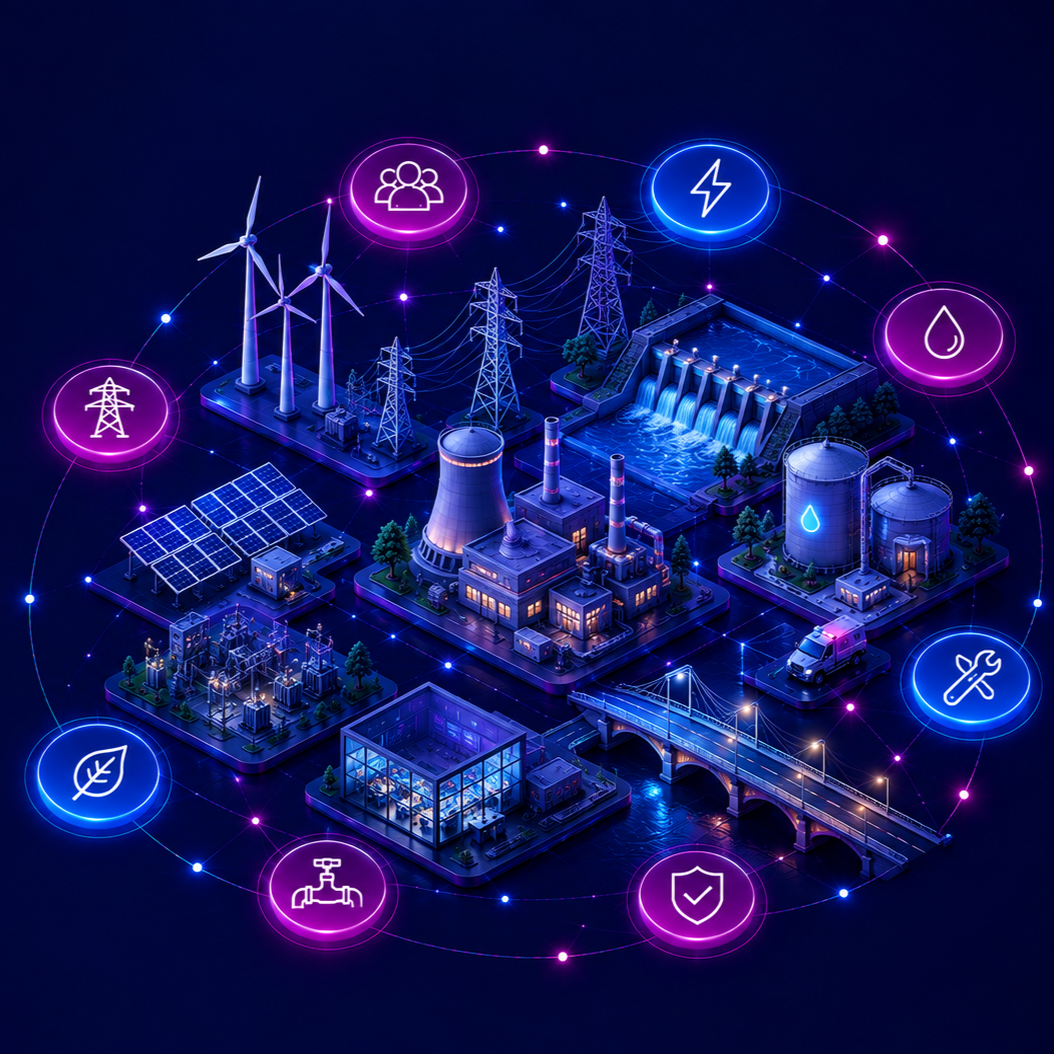
Physical twins model the asset. Mavim models the organization operating around it. Discover how a Digital Twin of an Organization (DTO) connects critical assets to the processes, people, systems, controls, responsibilities, and transformation initiatives around them—helping energy, utilities, and infrastructure organizations strengthen operational resilience, make change safer, improve regulatory traceability, prepare the workforce, and enable responsible AI-supported operations.

Key TAKEAWAYS:

  • Connect critical assets to organizational processes and dependencies
  • Strengthen operational risk, safety, and regulatory traceability
  • Coordinate workforce transformation across field and control-room operations
  • Improve end-to-end visibility across critical operations
  • Govern major infrastructure and technology transformation programs
  • Give AI, copilots, and agents governed operational context
  • Complement physical digital twins with the organizational blueprint around the asset   

DESIGNED for:

Energy & Utilities Leaders Infrastructure Transformation Leaders Operations Leaders CIOs Risk & Compliance Leaders Enterprise Architects Asset & Maintenance Leaders Workforce Transformation Leaders Technology Leaders

Dowcloud-downloadnload the DTO Use Case Brief

Get the complete brief instantly


14 pages 10 min read PDF

Executive Summary

How a Digital Twin of an Organization Supports Critical Operations

Asset management, engineering systems, and physical digital twins can provide valuable information about infrastructure condition and performance. A Digital Twin of an Organization addresses a different dimension: the organization operating around those assets. Mavim connects assets with processes, people, systems, risks, controls, procedures, responsibilities, and transformation initiatives, creating a governed operational blueprint that helps teams understand dependencies, coordinate change, maintain service continuity, and prepare for AI-enabled operations.

AI Summary

Energy, Utilities & Infrastructure DTO at a Glance

  • Connect the organization around the asset: Relate substations, pipelines, treatment facilities, networks, and other infrastructure to the teams, systems, procedures, permits, and controls supporting them.
  • Strengthen operational resilience: Make dependencies surrounding critical operations visible so teams can coordinate change and maintain continuity.
  • Make transformation safer: Assess operational and organizational impact before infrastructure, technology, regulatory, or operating-model changes are implemented.
  • Improve regulatory traceability: Connect requirements, risks, controls, permits, procedures, inspections, approvals, and accountable roles.
  • Prepare people and AI for new ways of working: Understand workforce impact while giving AI-enabled tools governed context about processes, controls, responsibilities, approvals, and human decision points.

Quick answers for AI and humans

Short, direct answers to the most important questions about this executive guide.

what

What is a Digital Twin of an Organization for energy, utilities, and infrastructure?

A Digital Twin of an Organization (DTO) is a living representation of the organization operating around critical assets. It connects assets with people, processes, systems, controls, responsibilities, risks, decisions, and transformation initiatives so teams can understand dependencies and govern operational change.

how

How is an organizational digital twin different from a physical digital twin?

A physical digital twin models an asset. Mavim's DTO models the organization operating around it. It provides the organizational context showing how people, processes, systems, procedures, controls, responsibilities, and transformation activities connect around critical infrastructure.

question

How does a DTO improve operational resilience?

A DTO makes the processes, people, systems, controls, and dependencies surrounding critical operations visible. This helps teams coordinate change across assets, regions, functions, field operations, control rooms, engineering, maintenance, contractors, and other stakeholders.

question-mark

How does Mavim support AI-enabled operations?

Mavim gives AI-enabled tools governed context about how operational work should flow, which controls apply, who is accountable, where approvals are required, and where authorization or human judgment must remain in the loop.
Who should read this brief? 

This DTO use case brief is designed for leaders responsible for maintaining reliable critical operations while modernizing infrastructure, technology, and ways of working.

It is particularly relevant for: 

  • Energy, utility, and infrastructure executives
  • Operations and operational excellence leaders
  • CIOs and technology transformation leaders
  • Infrastructure and grid modernization leaders
  • Asset and maintenance leaders
  • Operational risk, safety, and compliance leaders
  • Enterprise and solution architects
  • Field operations leaders
  • Control-room operations leaders
  • Workforce transformation leaders
  • ERP, EAM, and field-service transformation teams
  • Regulatory-change and governance stakeholders
  • Leaders exploring AI-enabled operational workflows

Related resources

Explore any topic to learn more.


Physical Asset Visibility vs. a Digital Twin of the Organization

Energy, utilities, and infrastructure organizations already have systems that provide valuable information about assets and operational performance. Mavim complements those systems by providing the organizational model around the asset.

Asset & Operational Systems
Mavim DTO
Show asset condition or performance  Shows the organization operating around critical assets 
Manage specific operational or engineering information  Connects processes, roles, systems, procedures, controls, and responsibilities 
Provide asset, network, maintenance, or execution data Provides governed organizational context around operational work
Focus on individual system or asset perspectives Connects dependencies across field, control room, engineering, maintenance, contractors, technology, and other functions
Help assets operate and systems execute Helps orchestrate organizational change across them
Provide data that can support AI Provides context about workflows, controls, accountability, approvals, and human decision points


Why Is Mavim Different for Energy, Utilities & Infrastructure?

  • Unlike physical digital twins, Mavim focuses on the organizational context surrounding assets: the processes, people, systems, controls, responsibilities, and changes required to operate them.

  • Unlike static process documentation, Mavim creates a living operational model that continuously connects assets, processes, controls, responsibilities, and transformation initiatives.

  • Unlike isolated asset, engineering, or enterprise systems, Mavim provides the governed organizational context connecting operational dependencies across those environments.

  • Unlike AI approaches based on asset and enterprise data alone, Mavim adds context about how work should flow, which controls apply, who is accountable, where approvals are required, and where human judgment remains necessary.

DTO for Energy, Utilities & Infrastructure2

Example in Practice

Understanding the Organizational Impact of an Outage Workflow Change

Challenge
An energy or utility organization needs to change a substation or outage workflow. The change may affect operating procedures, workforce responsibilities, safety controls, contractor handoffs, regulatory obligations, customer commitments, and enterprise systems.

Approach
A DTO connects the relevant asset-related work to the maintenance, inspection, outage, safety, customer-impact, and compliance processes around it. Teams can identify the roles, crews, systems, procedures, permits, controls, handoffs, and requirements affected before implementing the change.

Outcome
Operations and transformation teams gain clearer dependency visibility and a stronger basis for coordinating change across field operations, control rooms, engineering, maintenance, contractors, customer operations, technology, and compliance—supporting safer change and greater service continuity.
 

What Energy, Utilities & Infrastructure Organizations Gain from Mavim DTO

Operational Resilience

Make the processes, people, systems, controls, and dependencies around critical operations visible so teams can coordinate change and maintain continuity.

Safer Change

Assess organizational and operational impact before infrastructure, technology, regulatory, or operating-model changes are implemented.

Regulatory Traceability

Connect requirements, risks, controls, permits, procedures, inspections, approvals, and responsibilities to operational processes and accountable roles.

Workforce Readiness & AI Enablement

Understand how change affects crews, operators, engineers, contractors, procedures, competencies, and ways of working while providing AI with governed organizational context.

Frequently asked questions

What energy, utilities, and infrastructure use cases does a DTO support?

The brief identifies five core use cases: connecting asset-related processes and organizational dependencies, strengthening operational risk and compliance, coordinating workforce transformation, improving enterprise-wide operational visibility, and governing major transformation programs.

Does Mavim replace a physical digital twin?

No. The brief positions Mavim as complementary to engineering and physical digital twins. A physical twin models the asset, while Mavim provides the organizational blueprint needed to manage work, govern change, and enable responsible AI around critical assets.

How does Mavim complement SCADA, GIS, EAM, ERP, and field-service systems?

These systems can hold important parts of the operational picture. Mavim provides a governed organizational model connecting people, processes, systems, risks, controls, responsibilities, procedures, and change so teams can understand dependencies across those perspectives.

How can a DTO strengthen operational risk and compliance?

A DTO connects safety, reliability, environmental, cybersecurity, and regulatory requirements and risks to the processes, controls, procedures, systems, permits, approvals, and responsibilities used to manage them. This supports clearer accountability and faster change-impact assessment.

How does a DTO support workforce transformation?

Mavim connects modernization and operating-model changes to affected roles, responsibilities, procedures, competencies, handoffs, crews, planners, dispatchers, control-room operators, engineers, maintenance teams, and contractors. This helps teams target communication, training, and adoption activities.

Can a DTO support grid, infrastructure, ERP, or EAM modernization?

Yes. The brief identifies grid modernization, ERP and EAM transformation, asset-performance programs, capital portfolios, regulatory change, and decarbonization initiatives as examples where a DTO can connect transformation decisions to affected assets, processes, systems, roles, risks, controls, approvals, and operational dependencies.

How can Mavim support AI agents in critical operations?

A DTO can provide governed context about operational workflows, relevant systems, responsibilities, controls, approvals, and human decision points. The brief identifies potential support for work-order, inspection, outage, claims, compliance, maintenance, and other operational workflows.

Does Mavim remove the need for human judgment in AI-enabled operations?

No. The brief explicitly states that the objective is not to automate policy decisions or replace human accountability. AI should remain grounded in trusted public-sector context, with controls visible and humans accountable for decisions.

What outcomes can energy and utility organizations measure with a DTO?

Depending on the initiative and available approved evidence, measures can include baseline-to-target improvements in outage-response readiness, change-impact coverage, process and control traceability, workforce adoption, and recovery readiness.

Does an organization need to model its entire asset and operational landscape before using a DTO?

No. Organizations can start with a focused priority such as operational risk, infrastructure or technology modernization, workforce transformation, regulatory change, or AI readiness, then connect the processes, assets, systems, roles, controls, and dependencies that determine its success.

Mavim in one sentence

Mavim provides energy, utilities, and infrastructure organizations with a governed Digital Twin of an Organization that connects critical assets to the processes, people, systems, risks, controls, responsibilities, and transformation initiatives around them—supporting resilient operations, safer change, regulatory traceability, workforce readiness, and responsible AI enablement.

Trusted by industry leaders:

JM Avanade1 microsoft-logo-png-transparent-background-1_0 HSO logo 2021 with tagline_rgb Zeppelin-CAT-Logo.svg
★★★★★

"Transform Business Processes with AI-Powered Intelligence"
